Energy regulation

Articles in The Journal of Regulation & Compliance « JoRC »

LAMOUREUX, Marie🕴️

📝L’obligation de vigilance des opérateurs énergétiques (“The Vigilance Obligation of the Energy Operators”), in 🕴️M.-A. Frison-Roche (ed.), 📕L’obligation de Compliance (“Compliance Obligation”)e (

► Full Reference: M. Lamoureux, "L’obligation de vigilance des opérateurs énergétiques", in M.-A. Frison-Roche (dir.), L'obligation de Compliance, Journal of Regulation & Compliance (JoRC) and Dalloz, coll. "Régulations & Compliance", 2024, to be published - 📕read the general presentation of the book, L'obligation de Compliance, in which this contribution is published - ► English summary of this article de l'article (done by the Journal of Regulation & Compliance – JoRC): Firstly, the author shows, despite the diversity of energy activities (electricity by its very nature involves fewer international value chains, oil by its very nature involves more), the operators in this sector are sufficiently unique to justify their being considered globally in terms of vigilance obligation. Currently in French case law, they are directly concerned, not only because they have been summoned before the French courts in duty of vigilance cases, but also, and above all, because they are a sign of the intensity of the vigilance expected of them. The first part of the article develops the characteristics of energy operators, which influence the intensity of the obligation of vigilance. Their uniqueness stems precisely from the enterprises themselves, which are 'giants', subject to the obligation to draw up vigilance plans, firms often vertically integrated, in a sector concentrated on multinationals with very substantial resources and present throughout the value chain, whose activity involves infrastructures. The second part of the article justifies this intensity of the obligation of vigilance by the risks specifically linked to the activities of these energy operators. Indeed, even if it is true that their activity is very heterogeneous, the risks are very significant, in that on the one hand they build diverse and gigantic infrastructures, are involved in extractive activity, and on the other hand have a long-term impact on the environment. Firms are being asked to be vigilant themselves about these infrastructures and impacts. The administrative police have been doing this for a long time in this sector. But the third part of the article shows precisely that this is nothing new: the culture of risk prevention is already very present in these enterprises, not least because of the very strong presence of the State and regulations. There is a culture of 'regulatory conformity'.  In fact, climate vigilance  relies mainly on these operators. Energy operators are therefore at the centre, not only because they generate risks, but also because they hold many of the solutions for achieving the Monumental Goals targeted by the vigilance system: they are making a decisive contribution to the fight against climate change because they have the means to do so. This is one of the reasons why the major operators have all adopted a raison d'être.         -

Articles

Difficulty of Compliance in Self-Regulation system: example of the Summer 2020 meetings of OPEC about the “conformity”​ for Oil Market Stability​

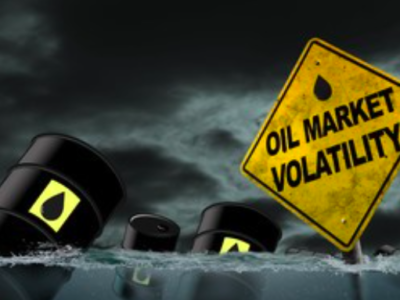
Full reference: Frison-Roche, M.-A., Difficulty of Compliance in Self-Regulation system: example of the Summer 2020 meetings of OPEC about the "conformity"​ for Oil Market Stability​, Newsletter MAFR – Law, Compliance, Regulation, 26th of August 2020 Read by freely subscribing other news of the Newsletter MAFR – Law, Compliance, Regulation   Summary of the news The world production of oil is largely coordinated by the Organization of the Petroleum Exporting Countries (OPEC) and especially by its Joint Ministerial Monitoring Committee (JMMC). On 15th of July 2020, this Committee decides to reduce the world production of oil in order to maintain a certain price stability in a context of restricted demand because of the COVID-19 pandemic.  However, such a stability can be maintained only if each member respects this decision and effectively reduce its production level. This meeting of 15th of July also aimed to get member's conformity. In order to get this conformity, the JMMC declared that it will use "name and shame", shaming countries which do not respect the Committee's declaration and naming those which respect it. A second meeting, on 19th of August 2020, reminded to non-compliant countries their obligation and urged them to comply before the 28th of August.  We can observe two things:  The term used by the Committee is "conformity" and not "compliance", which implies less adherence to "monumental goals than the mechanical respect of formal rules. In an self-regulation system where there is not supposed to be a need for "conformity", the need for it is a clue that this self-regulation is malfunctioning.

Jurisprudence

Autorité de la concurrence (French Competition Authority)

Decision n°17-D-16 of 7th of September 2017 relating to practices implemented by the company Engie in the energy sector

Référence complète: Autorité de la concurrence (French Competition Authority), Decision relating to practices implemented by the company Engie in the energy sector, Engie vs Direct Energie, 7th of September 2017, n°17-D-16 Read the decision (in French) Read the press release

Jurisprudence

Autorité de la concurrence (French Competition Authority)

Decision n°17-D-06 of 21st of March 2017 relating to practices implemented in natural gas, electricity and energy services supply sector

Full reference: Autorité de la concurrence (French Competition Authority), Decision relating to practices implemented in natural gas, electricity and energy services supply sector, Engie vs Direct Energie/UFC que choisir, 21st of March 2017, n°17-D-06 Read the decision (in French) Read the press release Read the press release of the decision of 9th of September 2014 on which this decision is based    

Articles

RICHER, Laurent

Le règlement des différends par la Commission de Régulation l’Energie

Full reference: Richer L., Le règlement des différends par la Commission de Régulation de l'Energie, in Mélanges en l'honneur de Franck Moderne: Mouvement du droit public, Dalloz, 2004, p. 392