Confidence

Books

Can the Public Be Trusted?: On the Promise and Perils of Voluntary Compliance

► Full Reference: Y. Feldman,Can the Public Be Trusted?: On the Promise and Perils of Voluntary Compliance, Cambridge University Press, 2025.  - ► Presentation of the book (done by the Author) : "When do citizens voluntarily comply with regulations rather than act out of fear of sanctions? Can the Public Be Trusted? challenges prevailing regulatory paradigms by examining when democratic states can rely on voluntary compliance. Drawing on behavioral science, law, and public policy research, Yuval Feldman explores why voluntary compliance, despite often yielding superior and more sustainable outcomes, remains underutilized by policymakers. Through empirical analysis of policy implementation in COVID-19 response, tax compliance, and environmental regulation, Feldman examines trust-based governance’s potential and limitations. The book presents a comprehensive framework for understanding how cultural diversity, technological change, and institutional  shape voluntary cooperation.". -   📗Read the book

Conferences

conference

🎤Entreprises assujetties au Droit de la Compliance : la charge de prouver la crédibilité de la trajectoire des actions entreprises à partir des structures mises en place (Companies subject to Compliance Law: the burden of proving the credibility of the course of action taken on the basis of the structures put in place), in 🧮Les techniques probatoires adéquates dans le Contentieux Systémique Émergent (Appropriate Evidentiary Techniques in Emerging Systemic Litigation), in cycle of conference-debates “Contentieux Systémique Émergent” (“Emerging Systemic Litigation”)

  🌐subscribe to the Video Newsletter MAFR Surplomb - ► Full Reference: M.-A. Frison-Roche, "Entreprises assujetties au Droit de la Compliance : la charge de prouver la crédibilité de la trajectoire des actions entreprises à partir des structures mises en place" ("Companies subject to Compliance Law: the burden of proving the credibility of the course of action taken on the basis of the structures put in place"), in Les techniques probatoires adéquates dans le Contentieux Systémique Émergent (Appropriate Evidentiary Techniques in Emerging Systemic Litigation), in cycle of conference-debates "Contentieux Systémique Émergent" ("Emerging Systemic Litigation"), organised on the initiative of the Cour d'appel de Paris (Paris Cour of Appeal), with the Cour de cassation (French Court of cassation), the Cour d'appel de Versailles (Versailles Court of Appeal), the École nationale de la magistrature – ENM (French National School for the Judiciary) and the École de formation des barreaux du ressort de la Cour d'appel de Paris – EFB (Paris Bar School), under the scientific direction of Marie-Anne Frison-Roche, October 14, 2024, 11am.-12.30pm., Paris Court of Appeal, Cassin courtroom - 🧮see the full programme of this event - ► English Summary of the conference : As developed below, the presentation shows that Systemic Litigation highlights what is incumbent on systemic companies: first and foremost, a permanent Evidential Obligation that they must satisfy with regard to stakeholders, in particular investors, partners, consumers and public opinion, whether or not there is a lawsuit. But it is essential to determine the purpose of this proof, the burden of which is permanent. It is a question of showing the efforts made on an ongoing basis by the crucial company to ensure that the system in which it operates does not collapse ("Negative Monumental Goal"), or even that it improves ("Positive Monumental Goal"). As these are inherently future factual goals, which is akin to impossible proof, it is a question of demonstrating "Credibility", i.e. showing that the structures put in place by the company and the behaviour already obtained by it, both internally and externally, generate a "trajectory" which can reasonably be expected to produce the effects expected by the Legislator which places obligations on companies. This is relevant whatever the systems involved, be they banking, financial, energy, climate, digital, etc., and whatever the monumental systemic goal targeted, be it the fight against corruption, money laundering, harmful climate change, the establishment of effective equality between human beings, respect for others, etc. It is in this new conception that the traditional notions of the object of proof, the burden of proof, presumption, means of proof, exemption from proof, and above all the judge's evidentiary role, must be adjusted to the Systemic Litigation that is emerging. - 🌐follow Marie-Anne Frison-Roche on LinkedIn 🌐follow Marie-Anne Frison-Roche on Instagram 🌐subscribe to the Newsletter MAFR Regulation, Compliance, Law

Conferences

final speech of a scientific manifestation

🎥 5 leçons en conclusions ouvertes (5 Lessons in Open Conclusions), in 🧮Compliance, vigilance et médiation

► Full Reference: M.-A. Frison-Roche, "Conclusion", in M. Boissavy, H. Dehghani-Azar, and M.-A. Frison-Roche (dir.), Journal of Regulation & Compliance (JoRC) and Conseil national des Barreaux (CNB), Compliance, vigilance et médiation (Compliance, Vigilance and Mediation), Amphitheatre of the Conseil national des Barreaux, November 30, 2023. - 🧮see the full programme of this event - 🌐follow Marie-Anne Frison-Roche on LinkedIn 🌐follow Marie-Anne Frison-Roche on Instagram 🌐subscribe to the Newsletter MAFR Regulation, Compliance, Law

Articles in The Journal of Regulation & Compliance « JoRC »

SILLIMAN, Bryan🕴️

📝Secret professionnel et coopération : les leçons de procédure tirées de l’expérience américaine pour une application universelle, in 🕴️M.-A. Frison-Roche (ed.), 📕La juridictionnalisation de la Compliance

► Full Reference: B. Silliman, "Secret professionnel et coopération : les leçons de procédure tirées de l’expérience américaine pour une application universelle" ("Privilege and cooperation, procedural lessons learned from the U.S for global application"), in M.-A. Frison-Roche (ed.), La juridictionnalisation de la Compliance, coll. "Régulations & Compliance", Journal of Regulation & Compliance (JoRC) and Dalloz, 2023, pp. 231-234.   - 📕read a general presentation of the book, La juridictionnalisation de la Compliance, in which this article is published - ► English summary of the article (done by the Journal of Regulation & Compliance): The French legal system is evolving, organizing interaction between lawyers with regulators and prosecutors, especially in investigations about corruption or corporate misconduct, adopting U.S. negotiated resolutions such as the Convention judiciaire d'intérêt public, which encourages "collaboration" between them.  The author describes the evolution of the U.S. DOJ doctrine and askes French to be inspired by the U.S. procedural experience, U.S. where this mechanism came from. Indeed, the DOJ released memoranda about what the "collaboration" means. At the end (2006 Memorandum), the DOJ has considered that the legal privilege must remain intact when the information is not only factual to maintain trust between prosecutors, regulators, and lawyers. French authorities do not follow this way. The author regrets it and thinks they should adopt the same reasoning as the American authority on the secret professionnel of the avocat, especially when he intervenes in the company internal investigation. - 🦉This article is available in full text for those registered for Professor Marie-Anne Frison-Roche's courses

Working papers

The attorney, vector of conviction in the new Compliance system

This Working Paper written in English is the basis for an article published in French in the French journal Dalloz Avocat , in March 2020.       Summary of the working Paper. If we perceive Compliance Law as an aggression of the private company and a binding set of mechanisms that have no meaning and added value for it, then the attorney has a utility: defending the business. It can do so not only during the sanctions phase, but also to prevent it. But this function is not central. It becomes so if we understand Compliance Law as a body of substantial rules, pursuing a "monumental goal": the protection of the person, goal injected by political bodies and taken up by the operator. From this, the company must convince everyone to take it back, inside the company and outside. In a general and contradictory debate, the attorney carries this conviction, because he and she is always convincing those who at the end judge (market, public opinion, etc.) that is their raison d'être.   (In this short document, the pop-ups refer to the different works that develop each of the points)

Articles

La « confiance du public » dans la jurisprudence de la cour européenne des droits de l’homme

Complete reference : Andriantsimbazovina, J., La « confiance du public » dans la jurisprudence de la cour européenne des droits de l'homme, in  Mélanges en l'honneur de Frédéric Sudre, Les droits de l'homme à la croisée des droits, LexisNexis, 2018, pp. 11-19. Read a general presentation in which the article is published.     Students can consult the article via the Sciences-Po Drive, "MAFR-Régulation & Compliance" folder.  

Articles in a legal collective publication

Le juge, le régulateur et le Droit

Breaking news

In the inaugural conference of March 2, 2018, Koen Lenaerts brings the “Europe of Compliance” to life

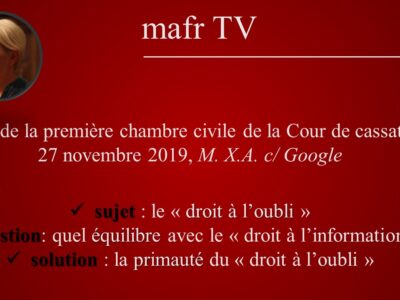
Among all the things that were important to remember, one of the things that struck me most in the extraordinary conference of the President of the Court of Justice of the European Union Koen Lenaerts on "Europe of the Compliance "held on March 2, 2018 was his ability to make" live Europe ". Not only to make it understand but also to make it "live". Here is the challenge: that compliance is not an accumulation of processes without reason and without flesh, but a living whole taking its meaning into consideration of the human being, a person whose judge is concerned. On 2 March 2018, Koen Lenaerts therefore came to an amphitheater at the University Panthéon-Assas (Paris 2) to inaugurate the series of conferences organized by the Journal of Regulation & Compliance (JoRC), a cycle that has the general title: Pour une Europe de la Compliance (For the Europe of Compliance). The School of Public Affairs of Sciences Po, the Department of Economics of Sciences Po, the Ecole doctorale de droit privé  (Doctoral School of Private Law) at the Université Panthéon-Assas- Paris 2 (Panthéon-Assas University – Paris 2) and the School of Law of the University Panthéon-Sorbonne (Paris I), are associated with this cycle. Many personalities will take the floor. Presented by Professor Thierry Bonneau, the conference made by President Koen Lenaerts was extremely rich and solid, perfectly constructed. Everyone had known the quality of the conference to be delivered by the President of the CJEU. The content of his demonstration will be found in the article he will give for the book that will be published in the Régulations & Compliance Series edited by Marie-Anne Frison-Roche at Éditions Dalloz. And the reader will find all the strength of this demonstration. This is necessary to venture into this area of "Compliance" : Koen Lenaerts recalled that we were still looking for the definition and a French term that would do justice to a satisfactory definition1Frison-Roche, M.-A., Compliance Law, 2016.. This question was echoed by Antoine Garapon in his discussion. Embodying the firmness that must be shown when words are uncertain, President Koen Lenaerts emphasized that the European Union is based on "Rule of Law". This means that the behaviors must respect Law. For that, – and that is why it is necessary to take in the literal sense the English expression "to comply with", the enterprise must not be passive but to make sure that its behavior is actually respectful of legal prescriptions. In this, there is a general paradigm shift, which inverses the relation betwenn the operator and the rules, from the Ex Post to the Ex Ante2On this passage, which internalises the "Regulatory Law" in the company, c. not. Frison-Roche, M.-A., From Regulation Law to Compliance Law, 2017, and the book, Régulation, Supervision, Compliance (Regulation, Supervision, Compliance), 2017.  as the entreprise has to be itself active to secure the effectiveness of the rule of Law. This internalization of the rule by the company develops both a procedural culture and a behavioral culture, in which companies can express an ethical dimension and build a "Trust Pact" 3About this notion, s. Frison-Roche, M.-A., Compliance and Trust, 2017 ; Drawing the Circles of Compliance Law, 2017. with states and public authorities. This change has been brought about by globalization, since states no longer have the means to impose ethical norms of behavior on businesses through the Ex Post intervention of their jurisdiction, but States like companies are gaining the benefit of this internalisation of rules in compagnies because the Compliance is inseparable from the accountability by which the company is compelled to justify that it actually tends to achieve the overall goals assigned by the public authority. Thus, after exposing the general movement by which Europe opened up to this upheaval, President Koen Lenaerts took on three technical dimensions crossed by this new conception. The first is the Financial Markets Law. The second is Competition Law, about which the President has notably developed the Court's reflections on whether the adoption of a compliance program by an enterprise found to have violated Competition Law, in particular by "negligence" is neutral, or constitutes a mitigating circumstance or constitutes an aggravating circumstance. This question was taken up after the presentation in the discussion with the room. The third is that of personal data. Taking again as in a waltz with three times his remarks, the president of the Court of Justice found that the compliance, whereas it consists in transforming the Ex Post into Ex Ante becomes juridicalised and in this the Court of justice holds its not only in Europe but also in relation to the world, without however ever forgetting that it is the States that are drawing up the rules that are the foundation of Europe. We will find in the article that will be published all these precious elements and no doubt that the elegance of the pen will be equal to that of speech. But, written exercise requires, the reader will not find what we had the chance to attend: the story of two cases by the one I would prefer to name the "Professor Koen Lenaerts". Two famous cases, which we teachers, comment and remind in our courses, that students learn and recite, quote in their copies. But never that way. The first case is the Schrerms case, where the court said that Facebook could not transfer this person's personal data to the United States since he was opposed to it. To make it clear, the President revived it through the litigant, who was a student and for this reason he spoke directly to the students present in the amphitheater. He pointed out that the plaintiff at the origin of the case was a law student, like them. He detailed his situation in Austria, making some quotes in perfect German, pointing out that this student was now at the doctoral stage, inviting students to be brave, as he was. At each episode of the story, the speaker told the students, making some detours on his own student life because finally we were all in family … Alma Mater. But his hands were telling the story even more: they were thrown themselves into the story, they brewed the space, it seemed as if they themselves were no more grandiloquent than the speaker but found their place exactly , in a magisterial position. Yes, here is a president in front of which companies have a hard time hiding the truth, a president with such firm hands and whose torso does not move but turns to the left and right to talk to everyone. The second story was even more beautiful. The Google Spain case, I know it. I even know it by heart. I read it, commented on it, cited it a lot of times … But all of a sudden that's what happened to a small Spanish merchant: President Koen Lenaerts told us his story, and I rediscovered the case. A small Spanish shopkeeper, whose name the speaker uttered in perfect Spanish, obtained from the Court of Justice that his "right to be forgotten" was recognized. President underlined the apparent paradox of his  insistence for the appearance of his surname in the judgment by which this person had thus obtained the erasing of his surname! Yes, I did not notice … Why did he ask for the mention of his name in the right to have his name deleted? Because it's a matter of honor. This is what the speaker insisted: do not joke with honor. And if you do, even Google will lose. The merchant had been subject to a forced property sale procedure because of financial difficulty, which spanish newspapers had echoed. His honor was been trampled. Then, by a happy return of fortune, he had recovered his property, his prosperity, his reputation. But from that, the press had not talked about it. Some lines in a newspaper of legal announcements, but that it is nothing for the human soul. That's why he wanted these mechanical digital links to disappear, which always and for all end up with articles presenting him as a wretch without ever ending up with articles presenting him as a prosperous merchant (because of the non-existence of these second articles). The speaker emphasized this dimension very much. And we know that the General Regulations that will come into force in May 2018 on personal data, which intrigues so much the Americans, draws in the judgment Google Spain its main solution in the matter: this "right to be forgotten" , subjective right so strange. He emphasized this dimension very much. And we know that the General Regulations that will come into force in May 2018 on personal data, which intrigues so much the Americans, draws in the judgment Google Spain its main solution in the matter: this "right to be forgotten" , subjective right so strange. Listening to President Koen Lenaerts, how not to think of Carbonnier? to  his articles of it, especially on sociological rule : "small causes, great effects"? From this conference, it will remain a great article, but as in the theater, where the ephemeral is part of the beauty of this art, what were these two stories, told by the one who knew how to listen when it was necessary to decide the two cases, stories told with the two firm hands that danced inviting students to enter this round, even as the President of the Court of Justice had to leave immediately to Luxembourg to hold such heavy obligations, yes it was simply beautiful .    

Working papers

🚧 Compliance : before, now, after

This working paper serves as a support for the article to be published in the book written in French, Ingall-Montagnier, Ph., Marin, J.-Cl., Roda, J.-Ch. (dir.), Compliance : l'entreprise,le régulateur et le juges, in the Serie Regulations, co-edited by Éditions Dalloz and the Journal of Regulation and Compliance (JoRC). This work uses by links the Compliance and Regulation Law bilingual Dictionnary. - Summary. We have to admit it. Because in front of so numerous and so disparate Compliance rules we pain so much to figure out, we are constraint to go in so changing directions, that we console ourselves with their weight, their cost and our misunderstanding by affirming that Compliance is "complex" and "transdisciplinary", as if complicated words could mask our disarray. But "Compliance" is not a cataclysm, a bomb sent by the Americans to annihilate Europe, the new form of a Cold War in legal dress, it is a way of seeing things that comes from afar, with its own coherence and which must first be understood. If one understands where this new corpus comes from, which now obliges companies to prove that they effectively take on the fulfillment of certain goals that go beyond them, notably the fight against money laundering, tax evasion, but also the fight against the sale of human beings or the struggle for the preservation of nature and Earth, then we can continue the story. Indeed, not all companies are targeted by such internalization of "monumental goals" within them." An ordinary firm is destined to develop itself in order to achieve a goal which is its own. The concern of these goals can only be for the "crucial firm. "If there is to be a change in the corporate project, then it can only depend on its" position "in a system, a financial, economic, social, global system, or because it has itself decided that it would be so. The company then bears the burden of proof that such a discourse of new responsibility corresponds to a behavior and an effective culture. The weight of the rules already exists today. And it is for the moment that now, in a negative and passive way, Compliance is perceived, by those who "undergo" it (companies), even by those who apply it (public authorities). The transformation towards a "culture of trust" is the issue between today and tomorrow, because tomorrow, it is a relationship of trust that could be built between these companies and the public authorities, because they would share information (systemic issue), because they would agree on the less technical monumental goals (protection of human beings issue). In this perspective, "Compliance" is above all a bet, that of the place of human beings in globalized markets.

Articles in a legal collective publication

Compliance et confiance

Conferences

The functions of Compliance. A political choice to do

Reférence complète : Frison-Roche, M.-A., Les fonctions de la Compliance. Un choix politique à faire ("The functions of Compliance. A political choice to do"), in  Borga, N. et Roda, J.-Ch. (dir.), La compliance : nouveaux enjeux pour les entreprises, nouveaux rôles pour les juristes ? ("Compliance: new challenges for companies, new roles for lawyers?"), Centre du Droit de l'entreprise Louis Josserand, Université Lyon IIII Jean Moulin, France, Lyon, 2 juin 2017. Read the program (in French) Summary of the conference : Compliance mechanisms are being constituted in "Compliance Law", new branch of Economic Law. Its functions are determined by the goals. But the goals are "monumental", since it is nothing less than the end of corruption, trading in influence, arms trafficking, international terrorism, trafficking in human beings, selling of human organs, the effective safeguard of environmental protection, safeguarding the planet, access to culture for all, preservation of civilization, the effectiveness of human rights … The goals of a company are not a priori of this order, even if every firm understands that it is clever to appear amiable. By comparing the two types of goals, a difference of nature is measured. By the Compliance Law, companies are therefore invited to "get out of themselves. Consequently, the functions that shape the contours of Compliance Law transform those who are the "subjects of law", the enterprises: these are the subjects, insofar as they are agents of legality. But this can not be the case for all companies. If the effect of Compliance were to be generalized to all companies, this would be catastrophic and would make no sense. However, who firmly and precisely drew the circle of "legal subjects eligible to be the legality agent" of Compliance? With the considerable costs and responsibilities that go with it? If it has not been the Legislator, it will have to be the Judge. Because the judge is guardian of the spirit of Law and guardian of legal orders. Especially if it is a global legal order. - Moreover, companies are not only passive subjects of Compliance Law – which would be the case of a misunderstood Compliance Law – but are also active subjects of Compliance Law. Indeed, these "monumental goals" which draw the functions of the Compliance are exactly the same as those of the Corporate Social Responsibility. Thus, if the Compliance is conceived of only as an immense and empty submission of all undertakings to total regulation, the result will be an opposition between the regulatory power and the will of undertakings, a concrete opposition between public authorities and companies. If, on the other hand, we conceive Compliance Law as that by which "crucial enterprises" like the Regulators are moving towards the realization of "monumental goals, then Compliance Law crystallizes a" Trust Pact""between the two, Which goes beyond the borders and becomes a means of regulating globalization. This second conception is the future of European Law. -   See the slides (in French). Read the working paper on which the conference is based (working paper in English)

Working papers

🚧 Compliance and Trust

Compliance. Trust. Two words that come more and more often than before at our readers' eyes or listeners' ears. And yet they do not seem to match well. They even seem to repel each other. Indeed, Compliance is the way in which Public Authorities trust certain private operators, not in themselves, but with their structural capacities to mechanically capture the information that these authorities need (I). This presupposes a vision of the world in which Companies are powerful and powerful alone but are not virtuous, while Public Authorities, such as the Public Prosecutor's Office or Regulators, are weak but virtuous alone. Such a conception of Compliance transforms companies into automata. Such a vision of the world has no future: only human beings can be trusted, whose fallibility must be accepted, as Compliance is then the expression of a relationship built on trust that is to be seen between non-mechanical operators, namely public Institutions and private Operators, who can both have in common concern for an interest which goes beyond them and which was formerly called the general interest (II). From this reality, no new doubt for private companies, but which explains the strange intimacy between the violent Compliance Law and the new spontaneous order of Corporate Social Responsibility, it is up to them to demonstrate this concern Cf others that it shares with the Public Authorities, except to fall in Compliance reduced to costly procedures, empty endless staked out of sanctions without control. It is thus for Companies to make this branch of Compliance Law emerging become what can be the best, when it is possible that it becomes what would be the worst.

Glossary

Liberal profession

The liberal professions such as lawyers, doctors or accountants are organized into professional bodies and consider that they can not be reduced to mere companies operating in markets because the service they offer includes a human and moral dimension, translated by ethics, under the supervision of their internal professional organization, particularly through ex ante their power to adopt their own standards of behavior, and in ex post, the disciplinary power of their professional order. Competition law refutes this organization from the Old Regime and simply considers the "markets of legal or medical services, firms having to compete with each other and not having to organize the sector, by  or fixing Numerus clausus, etc. In the perspective of regulation, the liberal professions are, on the contrary, the ones most pertinento organize self-regulation in a globalized economy from the moment they give rise to a credible surveillance system and thus deserve the confidence of customers and public regulators.