Competition authority

Articles

📝Antitrust, natural field of Systemic Litigation

► Full Reference: M.-A. Frison-Roche, "Antitrust, natural field of Systemic Litigation", Concurrences, November 2024, No. 4, Art. No. 120776. - 📝read the article (in English) - 🚧read the bilingual Working Paper which is the basis of this article, with additional developments, technical references and hyperlinks - ► English Summary of this article: Systemic Litigation is a specific category of Litigation in which beyond the dispute between the parties the interest of a System is involved, in particular its future. Competition Law is a natural and long-standing field for this category, which is now emerging strongly for information, climate and energy systems.  It should be remembered that a market is not self-regulating and cannot continue to function in the long term unless it has the benefit of a judge, a figure who is specific in that he/she is both external to it and yet apprehends its specific interest. In order to satisfy this double requirement, liberal legal organisations often entrust the competition authority with jurisdiction over this Systemic Litigation. Ordinary courts will also hear such cases, either on appeal or in other proceedings, and it cannot be claimed that courts are excluded, the systemic dimension of the dispute being expressed by the presence of the competition authority in the proceedings. This explains the procedural rules that are hard to justify otherwise. The Authority, the European Commission for example, must be able to develop and express the specific interests of the competition system. This special role of the competition authority in this type of litigation, because it is systemic, has been in place for decades and should serve as a model for Systemic Litigation, which is being developed for other systems whose sustainability is now referred to the courts. - 🌐follow Marie-Anne Frison-Roche on LinkedIn 🌐follow Marie-Anne Frison-Roche on Instagram 🌐subscribe to the Newsletter MAFR Regulation, Compliance, Law 🌐subscribe to the Newsletter Surplomb, par MAFR

Articles in a legal collective publication

Article in a collective book dedicated to an Amicorum

📝Naissance d’une branche du Droit : le Droit de la Compliance (Births of a branch of Law: Compliance Law), in 📗Mélanges en l’honneur de Louis Vogel

► Full Reference: M.-A. Frison-Roche, "Naissance d'une branche du Droit : le Droit de la Compliance" ("Birth of a branch of Law: Compliance Law"), in Mélanges offerts à Louis Vogel. La vie du droit, LexisNexis – Dalloz – LawLex – LGDJ, 2024, pp. 177-188. - 📝read the article (in French) - 🚧read the bilingual Working Paper which is the basis of this article, with additional developments, technical references and hyperlinks - ► English Summary of the article:  The study focuses on the various movements that have given rise to Compliance Law, with particular emphasis on Competition Law. After a preliminary reflection on the construction of the legal system into branches of Law, their classification in relation to each other, the difficulty encountered in this respect by Economic Law, and the various movements that give rise to one of them, the diversity of which the branch subsequently keeps track of, the study is constructed in 4 parts. To find out what gave rise to Compliance Law, the first part invites everyone to reject the narrow perspective of a definition that is content to define it by the fact of "complying" with the applicable regulations in the sens to obey them automatically. This has the effect of increasing the effectiveness of the regulations, but it does not produce a branch of Law, being only an efficiency tool like any other. The second part of the study aims to shed light on what appears to be an "enigma", because it is often claimed that this is the result of a flexible method through the "soft law", or of an American regulation (for instance FCPA), or of as many regulations as there are occasions to make. Instead, it appears that in the United States, in the aftermath of the 1929 crisis, it was a question of establishing an authority and rules to prevent another atrocious collapse of the system, while in Europe, in 1978, in memory of the use of files about Jews, it was a question of establishing an authority and rules to prevent an atrocious attack on human rights. A common element that aims for the future ("never again"), but not the same object of preventive rejection. This difference between the two births explains the uniqueness and diversity of the two Compliance Law, the tensions that can exist between the two, and the impossibility of obtaining a global Compliance Law. The third part analyses the way in which Competition Law has given rise to conformity mechanisms: they had only constituted a secondary branch which is a guarantee of conformity with competition regulations. Developed in particular through the soft law issued by the competition authorities, the result is a kind of "soft obedience", a well-understood collaboration of a procedural type through which the company educates, monitors and even sanctions, without going outside Competition Law, of which compliance  (in the sens of conformity) is the appendix. The distance between a conformity culture and Compliance Law can be measured here. The fourth part aims to show that Competition Law and Compliance Law are two autonomous and articulated branches of Law. Since Compliance Law is a autonomous and strong branch of Law built around Monumental Goals, in particular the sustainability of systems and the preservation of the human beings involved so that they are not crushed by these systems  but benefit from them : the current challenge of European integration is to build the pillar of Compliance Law alongside the competitive pillar. Jurisdictions are in the process of doing this and articulating them. - 🌐follow Marie-Anne Frison-Roche on LinkedIn 🌐follow Marie-Anne Frison-Roche on Instagram 🌐subscribe to the Newsletter MAFR Regulation, Compliance, Law

Working papers

Working Paper

🚧Antitrust, natural field of Systemic Litigation

► Full Reference: M.-A. Frison-Roche, Antitrust, natural field of Systemic Litigation, Working Paper, July 2024 - 📝This working paper has been prepared as a basis for the article to be published "Antitrust, natural field of Systemic Litigation" in the Review Concurrences in September 2024 - ► Summary of this Working Paper: Systemic Litigation is a specific category of Litigation in which beyond the dispute between the parties the interest of a System is involved, in particular its future. Competition Law is a natural and long-standing field for this category, which is now emerging strongly for information, climate and energy systems.  It should be remembered that a market is not self-regulating and cannot continue to function in the long term unless it has the benefit of a judge, a figure who is specific in that he/she is both external to it and yet apprehends its specific interest. In order to satisfy this double requirement, liberal legal organisations often entrust the competition authority with jurisdiction over this Systemic Litigation. Ordinary courts will also hear such cases, either on appeal or in other proceedings, and it cannot be claimed that courts are excluded, the systemic dimension of the dispute being expressed by the presence of the competition authority in the proceedings. This explains the procedural rules that are hard to justify otherwise. The Authority, the European Commission for example, must be able to develop and express the specific interests of the competition system. This special role of the competition authority in this type of litigation, because it is systemic, has been in place for decades and should serve as a model for Systemic Litigation, which is being developed for other systems whose sustainability is now referred to the courts. - 🔓read the developments below⤵️ - 🌐follow Marie-Anne Frison-Roche sur LinkedIn 🌐follow Marie-Anne Frison-Roche on Instagram 🌐subscribe to the Newsletter MAFR Regulation, Compliance, Law 🌐subscribe to the Video Newsletter MAFR Surplomb

Conferences

🎤Synthèse, in 🧮Concurrence : les enjeux de la Compliance

► Full Reference: M.-A. Frison-Roche, "Synthèse" ("Synthesis"), in Concurrence : les enjeux de la Compliance​, May 24, 2024, Paris, Collège européen de Paris, Paris Panthéon-Assas University, 28 rue Saint-Guillaume - 🧮see the full programme of this event (in French):  🌐read the  la newsletter MAFR Law, Compliance, Regulation on 26 Mai 2024 about this colloquium and this synthesis (in English) - ► Summary of this concluding conference:The conference was based on the 'framework document' on conformity programmes published by the French Competition Authority, the Autorité de la concurrence, on 24 May 2022 and focused on one of the tools used, namely risk mapping. The care taken to bring together academics whose job it is to give an account of reality by classifying and naming it, which makes it easier to handle, and people who every day in enterprises find solutions to anticipate difficulties so that they can be resolved, or even prevented from arising, has borne fruit. - From all the presentations and discussions, 4 perspectives emerge, each showing what has been achieved, what may still emerge in interaction with all the other mechanisms in Compliance Law that incorporate risk mapping (for instance ,the French 2016 so-called "Sapin 2" law, the French 2017 so-called "Vigilance" law, the CS3D European directive, etc.) and the other mechanisms that are correlated with risk mapping (audit, internal investigations, evidence likely to be raised before a judge by the enterprise and/or by a stakeholder and what remains uncertain in this 2022 framework document.   - The first perspective is the basis of these recommendations, encouragement, methods, advice, etc. The second perspective is the means developed to establish and implement these compliance programmes. The third perspective is the scope of this framework document, which also depends to a large extent on the scope of the compliance programmes adopted by the firms themselves. The fourth perspective is that of the subjects of law who are obliged, or who benefit from the adoption of such  compliance programmes in Competition Law.   - During this conclusion, based solely on what each speaker had to say, I continued my reflections in each of these 4 directions. This reminded me of some of my work made in English on this subject:  M.-A. Frison-Roche (ed.), 📘Compliance Tools, ,2022   M.-A. Frison-Roche, 🚧 Support from Compliance Law for day-to-day management of Competition Law, 2021   M.-A. Frison-Roche, 🚧 Competition Law and Compliance Law, 2018   - 🌐follow Marie-Anne Frison-Roche on LinkedIn 🌐follow Marie-Anne Frison-Roche on Instagram 🌐subscribe to the Newsletter MAFR Regulation, Compliance, Law

Working papers

Working Paper basis for an article

🚧Births of a new branch of Law: Compliance Law

► Full Reference: M.-A. Frison-Roche, Births of a branch of Law: Compliance Law, Working Paper, November 2023. - 📕This Working Paper was drawn up as a basis for a contribution to the collective book given to Professor Louis Vogel, published in 2024 - ► Summary of this Working Paper: The study looks at the various movements that have given birth to Compliance Law, with particular emphasis on Competition Law. After a preliminary reflection on the construction of the legal system into branches of Law, their classification in relation to each other, the difficulty encountered in this respect by Economic Law, and the various movements that give birth to one of them, the diversity of which the branch subsequently keeps track of, the study is constructed in 4 parts. To find out what gave rise to Compliance Law, the first part invites us to reject the narrow perspective of a definition that is content to define it by the fact of "being conform" with all the applicable regulations. This has the effect of increasing the efficacy of the regulations, but it does not produce a branch of Law, being just a set of tools like others. The second part of the study aims to shed some light on what appears to be an "enigma", as it is often claimed that this is the result of a soft method, or of an American political decision, or of as many regulations as there are occasions to make. Instead, it appears that in the United States, in the aftermath of the 1929 crisis, it was a decision of establishing an authority and rules to prevent another atrocious collapse of the system, while in Europe in 1978, in memory of the use of files of personal and racial information, it was a question of establishing an authority and rules to prevent an atrocious attack on human rights. A common element that aims for the future ("never again") but not the same object of preventive rejection. This difference between the two births explains the uniqueness and diversity of the two Compliance Laws, the tensions that can exist between the two, and the impossibility of obtaining a global Law. The third part analyses the way in which Competition Law has given rise to conformity: a secondary branch which is a guarantee of conformity with competition rules. Developed in particular through the soft law issued by the competition authorities, the result is a kind of soft obedience, a well-understood collaboration of the procedural type through which the firm educates, monitors and even sanctions, without leaving  the cercle of Competition Law, of which conformity is an appendix. The distance between a culture of conformity and the substantial Compliance Law can be measured here. The fourth part aims to show that Competition Law and Compliance Law are two autonomous and articulated branches of Law. Since Compliance Law is a branch of Law built on Monumental Goals, in particular the sustainability of systems and the preservation of the human beings involved so that they are not crushed by them but benefit from them, the current challenge of European integration is to build the pillar of Compliance Law alongside the competitive pillar. Jurisdictions are in the process of doing this and of linking the two.   - 🔓read the Working Paper below⤵️ - 🌐follow Marie-Anne Frison-Roche on LinkedIn 🌐follow Marie-Anne Frison-Roche on Instagram 🌐subscribe to the Newsletter MAFR Regulation, Compliance, Law  🌐subscribe to the Video Newsletter MAFR Surplomb

Jurisprudence

🏛️Décision n° 22-DCC-186 du 30 septembre 2022 relative à la prise de contrôle exclusif de la société McKesson Europe par le groupe Phoenix

► Full Reference: Autorité de la concurrence (French Competition Authority), Décision relative à la prise de contrôle exclusif de la société McKesson Europe par le groupe Phoenix (Decision on the acquisition of sole control of McKesson Europe by the Phoenix Group), 30 September 2022, n° 22-DCC-186. - 🏛️read the decision (in French) -

Breaking news

📧 THE FRENCH COMPETITION AUTHORITY ALSO MAKE KIND OF PUBLIC INTEREST JUDICIAL AGREEMENT: EXAMPLE OF THE FRENCH COMPETITION AUTHORITY’S STATEMENT OF JUNE 3, 2021 ON FACEBOOK

► Compliance Law and Competition: for building, is it necessary to legislate ? Example of quasi-public interest judicial agreement: the French Competition Authority's Statement of June 3, 2021 on Facebook   The French law so-called "Sapin 2" of 2016, organized the "convention judiciaire d’intérêt public – CJIP" (Public Interest Judicial Agreement) which allows the prosecutor to undertake not to prosecute a company in returns for this company's commitments for the future. Is this mechanism reserved for this law, which only concerns corruption and bribery? The answer is often positive. Is it so obvious? Since the entity having the power to prosecute therefore always has the power not to prosecute. As the company always has the freedom to make commitments for the future. And everything stops. News in Competition Law illustrate this. On June 9, 2021, as part of a transaction, the Autorité de la concurrence (French Competition Authority) sanctions Google (➡️📝 Communiqué of the Autorité de la Concurrence , translated in English by the French Competition Authority) , which has not contested the facts, for abuse of dominant position for having privileged its services in the online advertising services. Similar facts were alleged against Facebook. But on June 3, 2021, the Autorité de la concurrence (French Competition Authority) published a "communiqué de presse" (➡️📝statement translated in English by the French Competition Authority) saying that Facebook has, during the investigation, proposed commitments regarding its future behavior. It is remarkable that this statement on Facebook is published as an “acte de régulation” (regulatory act). Yes, it is indeed an regulatory act about the future and structuring the online advertising area, internalized in this company which engages itself in its future behavior. With its statement, the Competition Authority invites the “acteurs du secteur” (actors of this sector) to make observations, for the development of what will be a sort of compliance program. In these negotiations which are akin to a game table, where everyone calculates without knowing if they enter into a negotiation or a confrontation, the first game assuming that one shows more cards than in the second, it is indeed towards a kind of Public Interest Judicial Agreement that they are going with a Competition Authority which is both Judge and Prosecutor, concludes the agreement and, through a later decision, gives it force. Under the various legal qualifications, it is indeed the same general mechanism of Compliance Law, well beyond the specific French law known as Sapin 2. Managed in this way, Compliance Law being an Ex Ante corpus, transforms the Competition Authority, an Ex Post Authority, into an Ex Ante Authority, openly taking "acte de régulation" (Regulatory Act), and allows it to rely on the power of companies, thus “committed”, to structure markets, which are however not regulated. Like advertising or retailing areas (➡️📝see Frison-Roche, M.-A., From Competition Law to Compliance Law: Example of French Competition Authority's decision on central purchasing body in mass distribution, 2020). Thus Compliance Law has achieved the autonomy of Regulatory Law with regards to the notion, which nevertheless seemed intimate to it, of "sector".   ► register to the French Newsletter MaFR ComplianceTech®

Articles in The Journal of Regulation & Compliance « JoRC »

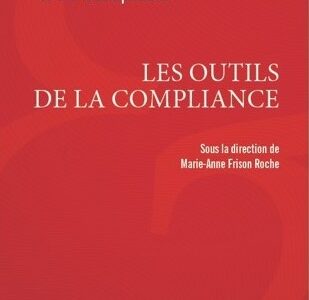
📝La formation : contenu et contenant de la Compliance, in 🕴️M.-A. Frison-Roche (ed.), 📕Les outils de la Compliance

► Full Reference: M.-A. Frison-Roche, "La formation : contenu et contenant de la Compliance" ("Training: content and container of Compliance"), in M.-A. Frison-Roche (ed.), Les outils de la Compliance, coll. "Régulations & Compliance", Journal of Regulation & Compliance (JoRC) and Dalloz, 2021, pp.. 227-244. - 📝read the article (in French) -   🚧read the bilingual Working Paper which is the basis of this article, with additional developments, technical references and hyperlinks - 📕read a general presentation of the book, Les outils de la Compliance, in which this article is published - ► Summary of the article (done by the Journal of Regulation and Compliance): Firstly, as Training is a specific Compliance tool, it is supervised by Regulators. It becomes mandatory when it is contained in Compliance programs or sanction decisions. Since effectiveness and efficiency are legal requirements, what is the margin of companies to design them and how to measure the result? Secondly, as long as each Compliance tool includes, more and more, an educational dimension, we can take each of them to identify this perspective. So even condemnations and prescriptions are so many lessons, lessons given, lessons to be followed. The question is then to know who, in this so pedagogical Compliance Law, are the "teachers"? -

Articles

From Competition Law to Compliance Law: example of French Competition Authority decision on central purchasing body in Mass Distribution

Full reference: Frison-Roche, M.-A., From Competition Law to Compliance Law: example of French Competition Authority decision on central purchasing body in Mass Distribution, Newsletter MAFR – Law, Compliance, Regulation, 27th of October 2020 Read by freely subscribing the other news of the Newsletter MAFR – Law, Compliance     -   Summary of the news: Through its decision of 22nd of October 2020, the Autorité de la concurrence (French Competition Authority) accepted the commitments proposed by retail sector's firms Casino, Auchan, Metro and Schiever so that their agreement by which a common body centralizes purchases from numerous retailers, allowing each to offer these products under private label, is admissible with regard to competitive requirements.  In this particular case, the Authority had self-sized in July 2018, estimating that such a purchase center could harm competition, opening immediately a large consultation on the terms of the contract. In October 2018, the law Egalim permitted to the Authority to take temporary measures to suspend such a contract, what the Authority did from September.  The convention parties' firms committed on the one hand to update their contract limiting the power on suppliers, especially small and very small suppliers, excluding totally of the field of the contract some kind of products, especially food products and reducing the share of bought products volume dedicated to their transformation in distributor brand.  The Autorité de la concurrence accepts this proposal of commitments, congratulates itself of the protection of small suppliers operating like that and observe the similarity with the contract consisting in a purchase center between Carrefour and Tesco, which will be examined soon.  -   We can draw three lessons of this innovating decision, which could be a model for after:  1. The technique of Compliance Law permits to the Autorité de la concurrence to find a reasonable solution for the future.  Indeed, rather than punishing much later by a simple fine or to annihilate the performing mechanism of the purchase center, the Authority obtains contract modifications.  The contract is structured and the obtained modifications are also structural.  The commitments are an Ex Ante technique, imposed to operators, for the future, in an equilibrium between competition, operators and consumers protection and the efficacy of the coordination between powerful operators.  The nomination of a monitor permits to build the future of the sector, thanks to the Ex Ante nature of Compliance Law.  2. The retail sector finally regulated by Compliance technics. "Distribution law" always struggle to find its place, between Competition law and Contract Law, especially because we cannot consider it as a common "sector".  The Conseil constitutionnel (French constitutional court) refused a structural injunction power to the authority because it was contrary to business freedom and without any doubt ethics of business is not sufficient to the equilibrium of the sector. Through commitments given against a stop of pursuits relying on structuring contracts, it is by Compliance law that a Regulation law free of the condition of existence of a sector could leave. 3. The political nature of Compliance law in the retail sector As for digital space, which is not a sector, Compliance law can directly impose to actors imperatives that are strangers to them.  In the digital space, the care for fighting against Hate and for protecting private life; here the care for small and very small suppliers.    -   See in counterpoints the pursuit of a contentious procedure against Sony, whose the proposals of commitments, made after a public consultation, were not found satisfying. To go further, on the question of Compliance law permitting through indirect way the rewriting by the Conseil of a structuring contract (linking a platform created by the State to centralize health data with an American firm subsidy to manage them).

Jurisprudence

Autorité de la concurrence (French Competition Authority)

Decision n°17-D-16 of 7th of September 2017 relating to practices implemented by the company Engie in the energy sector

Référence complète: Autorité de la concurrence (French Competition Authority), Decision relating to practices implemented by the company Engie in the energy sector, Engie vs Direct Energie, 7th of September 2017, n°17-D-16 Read the decision (in French) Read the press release

Jurisprudence

Autorité de la concurrence (French Competition Authority)

Decision n°17-D-06 of 21st of March 2017 relating to practices implemented in natural gas, electricity and energy services supply sector

Full reference: Autorité de la concurrence (French Competition Authority), Decision relating to practices implemented in natural gas, electricity and energy services supply sector, Engie vs Direct Energie/UFC que choisir, 21st of March 2017, n°17-D-06 Read the decision (in French) Read the press release Read the press release of the decision of 9th of September 2014 on which this decision is based    

Articles in a legal collective publication

📝Les décisions des juges et des régulateurs favorisent-elles la compétitivité des entreprises françaises ?

📝Les décisions des juges et des régulateurs favorisent-elles la compétitivité des entreprises françaises ?, in 📗La compétitivité de la règle de droit

Documents decisions_des_juges.pdf 4em_de_couv.pdf programme_22_11_2013.pdf