Comparative Law

Articles in The Journal of Regulation & Compliance « JoRC »

GAUVAIN, Raphaël🕴️ & BALIAN, Blanche🕴️

📝Opposition et convergence des systèmes juridiques américains et européens dans les règles et cultures de compliance (Opposition and Convergence of American and European Legal Systems in Compliance Rules and Cultures), in 🕴️M.-A. Frison-Roche (dir.), 📕L’Obligation de Compliance

► Full Reference: R. Gauvain & B. Balian, "Opposition et convergence des systèmes juridiques américains et européens dans les règles et cultures de compliance" ("Opposition and Convergence of American and European Legal Systems in Compliance Rules and Cultures"), in M.-A. Frison-Roche (ed.), L'Obligation de Compliance, Journal of Regulation & Compliance (JoRC) and Editions Lefebvre – Dalloz, "Régulations & Compliance" Serie, 2025, pp. 401-417. - 📕read the general presentation of the book, L'Obligation de Compliance, in which this article is published - ► English Summary of this contribution (done by the Journal of Regulation & Compliance – JoRC) : The authors approach Compliance Law through its tools, mainly compliance programmes through which companies comply with regulations and investigations conducted by companies at the request of public authorities to identify risks and new modes of defence consisting of entering into agreements with prosecuting authorities.  The article highlights the American inspiration behind this movement, whereby the State, primarily for the sake of efficiency, transfers the responsibility for pursuing "Monumental Goals" to businesses. Based on this, the article first shows how American mechanisms have been imported into Europe, particularly France, with the Convention judiciaire d'intérêt public, taking on many of the characteristics of the DPA, even if some specific features remain, for example in the alert mechanisms.   Secondly, the convergence between the two systems is shown, because through the compliance obligations that form the core of these compliance tools, it is always Western values that are expressed, values that are common to American Law and European Law and European countries. It has enabled this importation, and we can now see that these values are more strongly upheld by Europe, particularly through the Vigilance duty and the DSA.  - 🦉This article is available in full text  (in French) to those registered for Professor Marie-Anne Frison-Roche's courses -

Thesis defence

🪑🪑🪑member of the jury for Annika Bauch’s thesis: 📓Le droit de l’entreprise à l’épreuve de la compliance (Company Law put to the test of Compliance)

► Full Reference: M.-A. Frison-Roche, member of the jury for Annika Bauch's thesis, Le droit de l'entreprise à l'épreuve de la compliance (Company Law put to the test of Compliance), University of Toulouse, 5 June 2025, 2-5pm.  - 🪑🪑🪑Other members of the jury :   🕴🏻Lukas Rass-Masson, Professor at Toulouse-Capitole University, thesis supervisor 🕴🏻Sandrine Tisseyre,  Professor at Toulouse-Capitole University,  🕴🏻Marc-Philippe Weller,  Professor at the University of Heidelberg, Germany 🕴🏻Caroline Coupet, Professor at the Université Panthéon-Assas (Paris II) - ► Presentation of the thesis: The thesis is based on French, American and German research. It is based on two perspectives. The first part of the thesis describes the way in which Business Law  feeds into Compliance, since it is within Business Law (and more particularly Company Law and the legal rules governing corporate bodies) that Compliance, which the author presented  to have originated in the United States, has transformed the way in which companies must be managed, having to take into account the extra-financial dimension of their activity, which modifies the very notion of social interest and leads to the integration of stakeholders into the corporate functioning. The second part of the thesis looks at the way in which Compliance has transformed Corporate Law, bringing with it new requirements, such as consideration of risks, regulatory mechanisms and ethical concerns, with the company itself becoming a vehicle for Compliance. This is achieved in particular by inserting compliance clauses into contracts, which is an appropriate but nevertheless limited tool for this compliance goal. - At the end of her defence, the candidate was awarded the degree of Doctor of Law and was informally congratulated by her jury on the quality of her work. - 📗The thesis was subsequently published by Larcier. - 📝It features a foreword by Marie-Anne Frison-Roche - 🌐follow Marie-Anne Frison-Roche on LinkedIn 🌐follow Marie-Anne Frison-Roche on Instagram 🌐subscribe to the Newsletter MAFR Regulation, Compliance, Law 🌐subscribe to the Video Newsletter MAFR Surplomb 🌐subscribe to the Newsletter MaFR Droit & Art

Conferences

🖥️Traduire dans l’institution judiciaire l’articulation entre l’international et le systémique, in🧮Le contentieux systémique émergent, un contentieux international justifiant la création de juridictions spécialisées ?

  - ► Référence complète : M.-A. Frison-Roche, "Traduire dans l'institution judiciaire l'articulation entre l'international et le systémique" in CREDIP, Faculté de Droit de l'Université Jean Moulin – Lyon 3, Le contentieux systémique émergent, un contentieux international justifiant la création de juridictions spécialisées, cycle de conférences sur Le contentieux international et la spécialisation des juges, Lyon , 18 avril 2025, 10h-12h. - 🪑🪑🪑Participent aussi à cette manifestation : 🪑Jacques Boulard, Premier président de la Cour d'appel de Paris 🪑Brigitte Brun-Lallemand, Première présidente de chambre de la Cour d'appel de Paris (Pôle économique) 🪑Jérémy Heymann, professeur de droit à l'Université Jean Moulin – Lyon 3 🪑Sabine Abravanel-Jolly, Professeure de droit au sein de l'Equipe Louis Josserand 🪑Marylou Françoise, maîtresse de conférences à l'Université Jean Moulin – Lyon 3 - 🧮consulter le programme complet de cette manifestation - ► Résumé de l'intervention : cette intervention ayant eu lieu après les présentations du Premier Président Jacques Boulard et Madame la Première Présidente Brigitte Brun-Lallemand, elle s'articule sur ces deux interventions.   I. Contentieux systémique et Contentieux international. On peut ainsi se demander si la nature d'un "contentieux systémique" se prête à ce qu'est un "contentieux international" ? A première vue, non. L'on pourrait poser que, d'une part, si le "contentieux systémique émergent" était "nécessairement international", alors l'on ne comprendrait pas pourquoi la Chambre spéciale internationale de la Cour d'appel de Paris ne suffisait pas et d'autre part, l'on ne comprendrait pas comment deux jugements ont été rendus sur le Devoir de Vigilance, dont on ne conteste pas qu'il appartient au Contentieux Systémique Emergent, alors qu'ils ne portent pas sur une chaine internationale de valeur : jugement TJ Paris 5 décembre 2023 dit La Poste, cas systémique actuellement devant la chambre spécialisée de la Cour d'appel de Paris ; TJ Paris 13 février 2025, dit SNCF, cas systémique, n'ayant pas fait l'objet d'appel.   II. Deux chambres spécialisées en miroir Dès lors, l'on pourrait dire que le contentieux systémique est de fait international mais pas par nature. Parce que cela n'est pas une subdivision du contentieux international, cela explique certes que la chambre 5-12 soit autonome par rapport à la chambre 5-16 (chambre internationale), mais parce que la perspective est de fait souvent transnationale, ces 2 chambres ont vocation à fonctionner en miroir. Car le système est un fait global. Et c'est plus en terme de fait global qu'il convient de le traiter, ce qui est plus facile dans des systèmes qui ne sont pas construit sur cette summa divisio du fait et du droit, qui convient mal au contentieux systémique.   III. Par nature, un contentieux dans lequel un système est "impliqué". Cela nous amène donc vers la définition du "Contentieux Systémique Emergent". Elle est simple : c'est un Cause dans laquelle un système est impliqué, dans lequel les intérêts de celui-ci sont en jeu, le premier de ses intérêts étant sa survie. C'est pourquoi la durabilité est une notion-clé, que l'on retrouve quelque soit le système impliqué. C'est pourquoi l'avenir est présent dans le contentieux systémique. C'est pourquoi l'office du juge est renouvelé car il s'agit d'un office Ex Ante, renouvellement à la fois procédural et substantiel qui conduit en pratique à un Droit processuel. Le fait systémique mène donc de droit à une dialogue des juges qui se spécialisent sur des faits globaux et les obligent, sauf à méconnaître ceux-ci, à se prendre en considération. Cela donne un nouveau statut au "droit comparé".   IV. Un contentieux émergent par le fait de systèmes nouveaux, globaux, saisis par des opérateurs locaux qui en fixent la stratégie.  Les systèmes ont déjà donné lieu à des contentieux : c'est la juridictionnalisation du Droit de la Régulation. Mais la Régulation a quitté ce prérequis des systèmes pour entrer à l'intérieur des opérateurs économiques dont le pouvoir de stratégie est situé localement. Le Droit de la Compliance internalise les besoins systémiques. Le Droit de la Compliance dont on affirma, parce qu'Ex Ante, qu'il allait dispenser du Juge, s'est lui-même juridictionnalisé. L'obligation de vigilance étant elle-même la pointe avancée de la Compliance, ne pouvait que donner une large place au Juge. Tandis que le système est l'enjeu du procès et de sa bonne solution, la partie au litige est l'opérateur cruciale : non seulement les entreprises régulées (comme les banques) mais encore les entreprises maîtresses des chaines de valeur (ce qui fait sortir le Droit de la Régulation des secteurs régulés). Or, les chaines de valeur sont un espace global contractuellement structuré transnational rattachées à un juge local qui est confronté à un office renouvelé avec le DIP.    V. Une culture juridictionnelle propre à des zones distinctes. Le Droit de la Vigilance, de la Compliance et de la Régulation tel qu'on le voit manier par les juges dépasse nos distinctions entre droit public et droit privé, entre les systèmes juridique, mais les décisions que l'on lit expriment trois cultures, procédurales et substantielles, différentes : l'Asie, les Etats-Unis et l'Europe. Cette culture de place porteuse d'une identité européenne de Vigilance, de Compliance et de Régulation repose notamment sur une culture juridictionnelle propre à cette zone-là. - 🌐suivre Marie-Anne Frison-Roche sur LinkedIn 🌐suivre Marie-Anne Frison-Roche sur Instagram 🌐s'abonner à la Newsletter MAFR Regulation, Compliance, Law 🌐s'abonner à la Newsletter en vidéo MAFR Surplomb 🌐s'abonner à la Newsletter MaFR Droit & Art

Books

BREYER, Stephen🕴

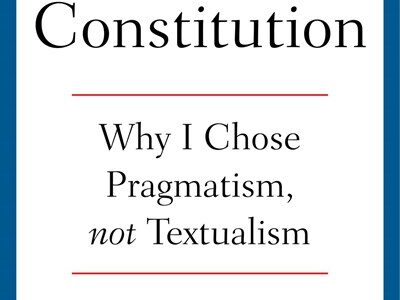
📗Reading the Constitution: Why I Chose Pragmatism, Not Textualism

► Full reference : S.Breyer, Reading the Constitution: Why I Chose Pragmatism, Not Textualism, Simon & Schuster, 2024, 361 p. - 📗read the 4th cover page - 📗read the book's table of contents - ► Book summary (by the publisher) : "A provocative, brilliant analysis by recently retired Supreme Court Justice Stephen Breyer that deconstructs the textualist philosophy of the current Supreme Court’s supermajority and makes the case for a better way to interpret the Constitution. “You will not read a more important legal work this election year.” —Bob Woodward, Washington Post reporter and author of fifteen New York Times bestselling books “A dissent for the ages.” —The Washington Post “Breyer’s candor about the state of the court is refreshing and much needed.” —The Boston Globe The relatively new judicial philosophy of textualism dominates the Supreme Court. Textualists claim that the right way to interpret the Constitution and statutes is to read the text carefully and examine the language as it was understood at the time the documents were written. This, however, is not Justice Breyer’s philosophy nor has it been the traditional way to interpret the Constitution since the time of Chief Justice John Marshall. Justice Breyer recalls Marshall’s exhortation that the Constitution must be a workable set of principles to be interpreted by subsequent generations. Most important in interpreting law, says Breyer, is to understand the purposes of statutes as well as the consequences of deciding a case one way or another. He illustrates these principles by examining some of the most important cases in the nation’s history, among them the Dobbs and Bruen decisions from 2022 that he argues were wrongly decided and have led to harmful results." -

Conferences

🎤Favoriser ou pas la « contractualisation » du Droit (“To favour or not the “contractualisation” of the Law”), in 🧮La contractualisation du droit. Acte II

🌐follow Marie-Anne Frison-Roche on LinkedIn 🌐subscribe to the Newsletter MAFR Regulation, Compliance, Law  - ► Full Reference: M.-A. Frison-Roche, "Favoriser ou pas la « contractualisation » du Droit" ("To favour or not the "contractualisation" of the Law"), final speech in Société de législation comparée (SLC) and Procuradoria Geral do Estado do Rio de Janeiro (PGE-RJ), La contractualisation du droit. Acte II, Paris, 21 June 2023. - 🧮See the full programme of this event (in French). The conference is held in French -

Breaking news

📧 Compliance Law is central in an infrastructure policy program

► Compliance Law is essential for the future of Africa: this is also a lesson from the Juin 2021 G7 Summit in its Infrastructure Plan.  It emerges from the G7 summit which ends on June 13, 2021 in Carbis Bay in the United Kingdom, a common desire to increase infrastructures in Africa, in itself and because otherwise China will do it, and will do it differently. Compliance Law will be determinant in this common action for three reasons. First and because the issue is about infrastructures, the construction and the management of infrastructures falling more under Regulatory Law than Competition Law (📕Chevalier, J.-M., Frison-Roche, M.-A, Keppler, J.EPPLER, J.H. et Noumba, P. (ed.), Économie et droit de la régulation des infrastructures. Perspectives des pays en voie de développement, 2009). However, Compliance Law is not a simple process for the effectiveness of rules which are external to it, it is the extension in companies of Regulatory Law. Where companies must implement regulatory goals within themselves, they develop Compliance rules (➡️📝see Frison-Roche, M.A., From Regulation Law to Compliance Law, 2017.  Secondly and because the issue is about Africa, the Rule of Law is sometimes not very solid there. By internalizing Regulatory Law in companies (or even by associating Arbitration with it), Compliance Law makes it possible to get out of this dead end (➡️📝Salah, MM, Conception and Application of Compliance in Africa, in 📕 Frison-Roche, M.-A. (ed.), Compliance Tools, 2021. Thirdly and because the topic si about China, Compliance Law in its European conception has the Monumental Goal of defending individuals while in its Chinese conception it aims to obtain their obedience to the rules (➡️📝Frison-Roche, M.-A., In China, Compliance Law deploys without, and even against democracy, China seeing Compliance only as an "efficiency process"; in Europe, it deploys with and even for democracy, 2021). On construction sites and in the human management of infrastructures, this changes everything. G7 members share the first conception. They must now implement it by their companies and thanks to them, private sector being in alliance with the political authorities which just expressed. Because Compliance Law is an alliance between political authorities and crucial economic operators.   ► register to French Newsletter MaFR ComplianceTech®

Articles

SALAH, Mahmoud, Mohamed

The Legal Framework for New Silk Roads: a Globalized Law at the Service of a Global ambition. When China Discovers the Virtues of Globalization of Law

Full reference: Salah, M. M., The Legal Framework for New Silk Roads: a Globalized Law at the Service of a Global ambition. When China Discovers the Virtues of Globalization of Law, International Business Law Journal, n°3, 2020, pp. 319-351 This article is available for Sciences Po's students via the Drive in the folder MAFR Regulation et Compliance

Articles in a legal collective publication

📝The impossible legal unicity of the category of “whistleblowers” (“L’impossible unicité juridique de la catégorie des “lanceurs d’alertes” “)

Full reference: Frison-Roche, M.-A., L'impossible unicité juridique de la catégorie des "lanceurs d'alertes" ("The impossible legal unicity of the category of "whistleblowers""), in Chacornac, J. (dir.), Lanceurs d'alertes, regards comparatistes, ("Whistleblowers, comparative perspectives"), Publications of the Centre français de droit comparé ("French Comparative Law Center"), May 2020, Volume 21, pp. 13-31.    Read the article (in French).    Read the general presentation of the collective book in which this article is published Read the bilingual working paper which had served of basis for this article.  Read the presentation of the conference "Les lanceurs d'alertes: glose" (Whistleblowers: glose") and especially the slides elabored for the colloquium organized by the Centre français de droit comparé ("French Comparative Law Center") on 23th of November 2018 under the direction of Jérôme Chacornac - Introduction of the article "Whistleblowers". This is a new expression. Which is a great success. Barely heard once, we hear it everywhere … A topic not of course or knowledge test, but rather a topic of daily conversation. Because it is spoken to us every day, in more or less gracious terms. For example President Donald Trump on October 1, 2019 declared to the press "want to question" the whistleblower who would have illegally denounced him and would not, according to him, have the right to conceal his identity, proof in this according to him of the lying character of his assertions against him, while his lawyer indicates on October 6, 2019 that he is not speaking on behalf of a single whistleblower thus taken to task but of a plurality of people who gave information against the President of the United States. Even the most imaginative screenwriters would not have written such brutal and rapid twists and turns. Spectators, we are waiting for the next episode, secretly hoping for the escalation. And precisely if we go to the cinema, it is still a whistleblower whose dedication and success, we are told about, even the drama, for the benefit of global society, and in particular democracy, since the secrets are fought for the benefit of the truth. The Secret Man designates Mark Felt as the first whistleblower. Returning to what we often present as being a more "serious" media1On the more general fact that cinema is undoubtedly the medium which most seriously restores the state of the Law, c. Frison-Roche, M.-A., Au coeur du Droit, du cinéma et de la famille : la vie, 2016., we listen to France-Culture and here is another story told by a historian who worked as an archivist on events that political power would have liked to keep hidden by possibly destroying their traces but which its trade led to preserve: here it is expressly presented to the studious listeners like a "whistleblower" …. While the same radio tries to find the one who could well be, as in a kind of contest the "first whistleblower"2L'histoire du premier lanceur d'alerte, France Culture, septembre 2019. ? …. This rewriting of History can be defended because ultimately what did other Voltaire do for Calas, or Zola for Dreyfus? It is also a subject of legislative discussion since in the United States the Dodd-Frank law of 2010 inserted in the law of 1934 which established the Securities & Exchanges Commission a complete device of remuneration and remuneration of the whistleblowers, whereas after having developed flexible but guiding lines in this regard in 20123European Commission, Guidelines on Whistleblowing, 6 of December 2012, SEC(2012) 679 final, updated on 23 of April 2018. , the European Commission published on November 20, 2018 the text of what will become a Directive intended to give a unified European status to the character, in the system gradually developed to protect the one who was presented in 2018 as that "cannot be punished for having done what is right". In Europe, the Directive first approved by a Resolution of the European Parliament on April 16, 2019 on the protection of persons denouncing breaches of Union Law and then adopted on October 7, 2019 (Directive of the European Parliament and of the Council of European Union on the Protection of Persons who Report Violations of European Union Law, different title, it should be noted, will have to be transposed into the laws of the Member States within the next two years. , since only "violations of Union Law" are targeted, but the character of the "whistleblower" is more generally targeted: he is "whole"4However, precisely the so common use of plurality ("whistleblowers") raises doubts about the uniqueness of the character. On this question, see. all the first part of the developments of this study, which leads to the conclusion rather than beyond the multitude of particular cases, there are rather two kinds of whistleblowers. V. infra I.. In short, the whistleblower is a star5The director of the film La fille de Brest says that she considers the whistleblower at the origin of the case of the Pick as a "movie character".. A sort of historical figure, covered in blows and glory, going from Voltaire to Snowden, both of whom find themselves embodied on the screens6Thus, the adventures of Snowden were brought to the screen by Oliver Stone in 2016, Snowden. On the question of knowing whether this film "faithfully reproduces" or not the case, Schetizer, P., Le film Snowden est-il à la hauteur de la réalité?, 2017. This article is favorable to the whistleblower, and to the film which tells us with emotion his case, in particular because (sic), it is easier than to read the Washington Post. …., Consecrated by law, which associates with it a legal regime of protection to such an extent that, like a Nessus tunic, it is this legal regime which will define the character and not the reverse. When we read the law of December 9, 2016 relating to transparency in the fight against corruption and the modernization of economic life, known as "Sapin 2", we notice that the Legislator makes much of this character, since 'he dedicates its chapter II to him7Underlined by us.: "From the protection of whistleblowers", and that it is by his very protection that he formally opens the door of Right to him. But why a plural? Admittedly when we read the recitals of the Community Directive of October 7, 2019 on the protection of whistleblowers8About this directive, v. the developments infra, it is only a list of all the subjects on which it is a good idea to protect them, which therefore prompts us to see in this plural only the index of this non-exhaustive list of subjects which it is good to tell us, a sign of the lack of definition of who should alert us. Reading the French law known as "Sapin 2" makes it less severe but more perplexing. Indeed, this plurality referred to by the title of the chapter devoted to "whistleblowers", there is no longer any question in the rest of the law, in the very definition which follows, article 6 which opens this chapter devoted to "whistleblowers" offering the reader immediately a singular since it begins as follows: "A9Underlined by us. whistleblower is a person …". No mention of diversity. The art of legislative writing would however have required that the qualifying article not only be singular but that it should not yet be undefined. Stendhal if he had still deigned to have the law for bedside book would have wanted to find at the beginning of chapter a sentence like: "The10Underlined by us. whistleblower is a person …". Thus seem to contradict themselves within the law "Sapin 2 the very title which presents the character, in that it uses a defined plural (the) while the defining article which presents it is in the undefined singular (one). … Here is a first reason not to advance any more but in a very careful way, in this "step by step" that constitutes a reading word for word: a gloss. This consists of taking the expression itself literally. The second reason for this technical choice is that the gloss is well suited to the introduction of a collective work, thus allowing more targeted developments to take place in other contributions, on the techniques, the difficulties and the limits of this protection, or on its history, or the reasons for the arrival in French law of these whistleblowers and the way they develop, or not, elsewhere. I am therefore going to content myself with taking this already legal expression to the letter: The (I) whistle (III). blowers (II).       
Books

Chacornac, Jérôme (ed.)

Lanceurs d’alerte: Regards comparatistes

Full reference: Chacornac, J. (ed.), Lanceurs d'alerte: regards comparatistes (written in French), Editions de la Société de Législation Comparée, Vol. 21, avril 2020, 192 p. This book follows the conference organized by the Centre français de droit Comparé on 23rd of November 2018   Read the fourth of cover (in French) Read the table of contents (in French) Read the presentation of Marie-Anne Frison-Roche's article: L'impossible unicité de la catégorie des lanceurs d'alerte, which is the introduction of the book     -

Working papers

🚧Globalization from the point of view of Law

► Full Reference: Frison-Roche, M.-A., Globalization from the point of view of Law, working paper, May 2017. - 🎤 This working paper initially served as a basis for a synthesis report made in French in the colloquium organized by the Association Henri Capitant in the International German Days on the subject of "Le Droit et la Mondialisation" (Law and Globalization). 📝 Il sert dans un second temps de base à l'article paru dans l'ouvrage La Mondialisation. 📝 it serves as a second basis for the article (written in English, with a Spanish Summary) to be published in the Brezilian journal Rarb – Revista de Arbitragem e Mediação  (Revue d`Arbitrage et Médiation). It uses the Bilingual Dictionary of the Law of Regulation and Compliance. - ► Summary of the Working: Globalization is a confusing phenomenon for the jurist. The first thing to do is to take its measure. Once it has been taken, it is essential that we allow ourselves to think of something about it, even if we have to think about it. For example, on whether the phenomenon is new or not, which allows a second assessment of what is taking place. If, in so far as the law can and must "pretend" to defend every being, a universal claim destined to face the global field of forces, the following question – but secondary – is formulated: quid facere? Nothing ? Next to nothing ? Or regulate? Or can we still claim that the Law fulfills its primary duty, which is to protect the weak, including the forces of globalization? - read the Working Paper below⤵️

Publication director

🏗️ direction of the collection: 📚Cours Dalloz – Série Droit privé

📚Publication of : 🕴️Yves-Marie LAITHIER, 📕Droit comparé (Comparative Law), 1st ed.

► Full Reference : Y.-M. Laithier, Droit comparé (Comparative Law), 1st ed., 2009, Dalloz, “Cours Dalloz-Série Droit privé” Series, 241 p. - 📕Read the back cover (in French) - 📕Read the table of contents (in French) - 📚See the entire collection in which the book is published. -