Philosophy, theory and sociology of law

Publication director

🏗️ direction of the collection: 📚Cours Dalloz – Série Droit privé

📚Publication of : 🕴️Jean-Baptiste RACINE and 🕴️Fabrice SIIRIAINEN, 📕Droit du commerce international (International Trade Law), 3rd ed.

► Full Reference : J.-B. Racine and F. Siiriainen, Droit du commerce international (International Trade Law), 1st ed. 2007 – 3rd ed., 2018, Dalloz, “Cours Dalloz-Série Droit privé” Series, 496 p. - ► General presentation of the book (written in French) : International trade law has become a fundamental discipline at a time of globalisation of the economy. It is a particular law: a law composite by nature, made up of national and international, public and private rules, which combines conflict rules and substantive rules and which knows the particular phenomenon of the lex mercatoria. Besides the sources of international trade law, fed in particular by the World Trade Organization (WTO), the book studies the operators of international trade, namely companies and States, the operations of international trade (sale, transport, distribution, subcontracting, transfer of intellectual property rights, etc.) and finally international trade litigation through its emblematic figure: arbitration. - 📕Read the back cover (in French) - 📕Read the table of contents (in French) - 📚See the entire collection in which the book is published. -


Publication director

🏗️ direction of the collection: 📚Droit et Économie

La petite entreprise

Working papers

The destruction of the de jure distinction between person and things: fabulous gain, catastrophic gain

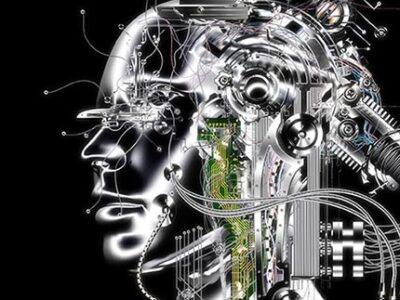
This working paper serves as a support for an article published in French in the Recueil Dalloz. In Lisbon, in the Web Summit of November 2017, a machine covered with a skin-like material and a sound-producing device gave a speech in public at this conference on digital. For example, a French article tells the event by this title : Le premier robot citoyen donne sa propre conférence au web summit  (The first citizen robot gives his own conference to the web summit). Some time later, reports show the same robot walking and taking more than 60 facial expressions, the text laudatif that accompanies the images designating the automaton by the article: she.1It is true that in 1966, the BBC already presented a sort of robot being the "ideal" servant and designating it by the article "she".. The machine, which falls legally within the category of "things", is thus presented as a person. Let's look elsewhere. Women, who are human beings, sign contracts by which they agree to give birth to children, with whom they claim they have no connection, that they are not mothers, that they will hand them over immediately at the exit of their belly to those who desired their coming, this desire for parenthood creating by hitself the true and only link between the child and his "parents of intent". The mother-carrier is often openly referred to as "oven". The woman, who falls legally within the category of the "person", is thus presented as a thing. The two sensational phenomena are of the same nature. They call two questions: 1.Why? The answer is: money. Because both are the result of the new construction of two fabulous markets by supply. 2.How? The answer is: by the destruction of the distinction between the person and things. The distinction between person and things is not natural, it is legal. It is the base of the western legal systems, their summa divisio. If this distinction disappears, and for money to flow, it must actually disappear, then the weak human being will become the thing of the strong one. Read below the developments.

Working papers

Is the French legal system an asset or a handicap for the competitiveness of our companies and our territory?

This working document served as a basis for a lecture given in French at the Académie des Sciences morales et politiques  (French Academy of Moral and Political Sciences) on September 25, 2017, in the cycle of conferences conducted under the presidency of Michel Pébereau,  Quelles réformes ? (What reforms?) Consult the presentation (in French) of the conference cycle (2017). It served as the basis for the publication of an article published  in French in 2018 in the book directed by Michel Pébereau Réformes et transformations (Reforms and transformations).

Analyses

Hayao Miyazaki explains that the drawings of video games made by machines are “insults to life”

Through the Open Culture website, it is possible to listen to Hayao Miyazaki who, in March 2017, claimed that video games whose drawings are made on Artificial Intelligence basis are "insults to life". Read below the history, the words that the Master has held, his conception of what is creation and "truly human" work, which is echoed by the definitions given by Alain Supiot, who also reflected on what robots do. This brings us back to the very notion of "creation" and creative work.   - Read below

Working papers

🚧 Compliance and Trust

Compliance. Trust. Two words that come more and more often than before at our readers' eyes or listeners' ears. And yet they do not seem to match well. They even seem to repel each other. Indeed, Compliance is the way in which Public Authorities trust certain private operators, not in themselves, but with their structural capacities to mechanically capture the information that these authorities need (I). This presupposes a vision of the world in which Companies are powerful and powerful alone but are not virtuous, while Public Authorities, such as the Public Prosecutor's Office or Regulators, are weak but virtuous alone. Such a conception of Compliance transforms companies into automata. Such a vision of the world has no future: only human beings can be trusted, whose fallibility must be accepted, as Compliance is then the expression of a relationship built on trust that is to be seen between non-mechanical operators, namely public Institutions and private Operators, who can both have in common concern for an interest which goes beyond them and which was formerly called the general interest (II). From this reality, no new doubt for private companies, but which explains the strange intimacy between the violent Compliance Law and the new spontaneous order of Corporate Social Responsibility, it is up to them to demonstrate this concern Cf others that it shares with the Public Authorities, except to fall in Compliance reduced to costly procedures, empty endless staked out of sanctions without control. It is thus for Companies to make this branch of Compliance Law emerging become what can be the best, when it is possible that it becomes what would be the worst.

Articles

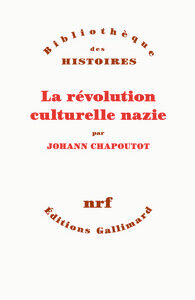
In the same way that blood was to be “The Law”, culture was only to be the return to “Nature”: this is the “Nazi revolution” explained by Johann Chapoutot in a new book

Johann Chapoutot takes the Nazi system seriously. Not only as a machine for the destruction of human beings, as an administrative machine, as a machine producing the fascination of human beings, brought to serve the machine, but as an intellectual machine to be taken seriously. Taking a system seriously is to understand it. This is not admitting it. It is to underline its bone to better identify it, to attach markers, to recognize some traces here and now. Yes, we must take an interest in the Nazi system  (I), to continue to seek to understand Nazi legal system (II), to admit the part that intellectuals took in building a system that revolutionized the intellectual vision of the world by inventing a Nature predominate on everything, even human beings, an intellectual construction in which Law and professors of law had a great place. This allows us to ask ourselves, not without fear, if we are not confronted today with a similar "cultural revolution", the scale of which we do not want to see, which we maybe collaborate (IV).   Read below.