Articles in a JoRC book

Articles in a JoRC book

RAPP, Lucien🕴️

📝Théorie des incitations et gouvernance des activités spatiales, in 🕴️M.-A. Frison-Roche (ed.), Collection Régulations & Compliance Les outils de la Compliance

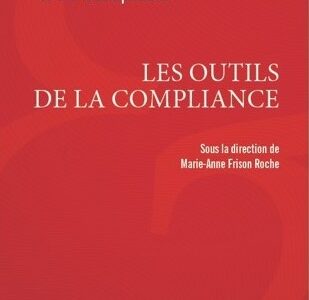
► Full Reference : L. Rapp, "Théorie des incitations et gouvernance des activités spatiales" ("Incentive Theory and Governance of Space Activities"), in M.-A. Frison-Roche (ed.), Les outils de la Compliance, coll. "Régulations & Compliance", Journal of Regulation & Compliance (JoRC) and Dalloz, 2021, p. 73-88. - 📕read a general presentation of the book, Les outils de la Compliance, in which this article is published - ► Summary of the article (done by the author): The article studies the conditions for an application of the theory of incentives to the problems currently posed by the governance of space activities. These activities have been enriched by the presence of numerous private operators, without the market that is being set up having yet been properly regulated. The accumulation of debris in close space highlights the difficulty of maintaining a situation where only national laws govern in the absence of a specialized international organization and in the insufficiency of the international treaties in force. This article shows the contributions of the behavioral approach in Law and economics and the interest that there would be in developing it. -

Articles in a JoRC book

TARDIEU, Hubert🕴️

📝Souveraineté des données et Compliance, in 🕴️M.-A. Frison-Roche (ed.), Collection Régulations & Compliance Les outils de la Compliance

► Full Reference: H. Tardieu, "Souveraineté des données et Compliance" ("Data Sovereignty and Compliance"), in M.-A. Frison-Roche (ed.), Les outils de la Compliance, coll. "Régulations & Compliance", Journal of Regulation & Compliance (JoRC) and Dalloz, 2021, p. 107-114. -  📕read a general presentation of the book, Les outils de la Compliance, in which this article is published - ► Summary of the article (done by the Journal of Regulation & Compliance) : After having considered that Europe had in terms of power "lost the battle" of personal data, the author asks for the same error, linked to a lack of interest at the start, not be repeated concerning "company data". The European Commission having affirmed its will in 2020, it is now necessary to build a "European ecosystem" for the sharing of industrial data in confidence. For this, the author explains that it is necessary to develop "incentives for the sharing of company data", in order to increase their available volume and fuel common progress in Artificial Intelligence between European companies and to use common complementary data, which 'none could generate alone, allowing the creation of new services. These incentives can be new and adapted "regulations", but also the adoption by the industry of a "common data model". But the author stresses that it is necessary to go, by experiments allowed by the "regulatory sandboxes". This will allow the deployment of data sharing, with Compliance being able to contribute to it, a path for a sovereign Europe of shared industrial data, a monumental objective which can thus be achieved. -

Articles in a JoRC book

CALANDRI, Laurence🕴️

📝Incitation(s) et autorégulation(s) : quelle place pour le Droit de la Compliance dans le secteur audiovisuel ?, in 🕴️M.-A. Frison-Roche (ed.), Collection Régulations & Compliance Les outils de la Compliance

► Full Reference: L. Calandri, "Incitation(s) et autorégulation(s) : quelle place pour le droit de la compliance dans le secteur audiovisuel ?" ("Incentive(s) and self-regulation(s): what place for Compliance Law in the audiovisual sector?"), in M.-A. Frison-Roche (ed.), Les outils de la Compliance, coll. "Régulations & Compliance", Journal of Regulation & Compliance (JoRC) and Dalloz, 2021, p. 115-122. - 📕read a general presentation of the book, Les outils de la Compliance, in which this article is published - ► Summary of the article (done by the Journal of Regulation & Compliance): The author took the audiovisual sector, "pilot" in the matter, to measure very precisely the way in which in France case law of the Conseil d'État introduced a logic of Compliance by leaving the operators free to organize themselves while supervising them. After recalling that by the decisions of 2016 Fairvesta and Société Numéricable, the Conseil d'État allowed the judicial control of acts of soft law, in particular those issued by the Audiovisual Regulator, the author confronts this state of law with the assertion of this Regulator that he is not the "policeman" of this sector. The Conseil d'État follows it by isolating among its acts those which are only incentive and escape the control by the judge, in the same way as acts of soft law adopted by the companies of the sector, expression of a self-regulation, They also escape litigation and are therefore also "unjustifiable". The author concludes that this completely renovates the governance of the sector, the Regulator by becoming more the arbiter and the supervisor of this new soft law. -

Articles in a JoRC book

RODA, Jean-Christophe🕴️

📝La compliance by design en antitrust : entre innovation et illusion, in 🕴️M.-A. Frison-Roche (ed.), Collection Régulations & Compliance Les outils de la Compliance

► Full Reference: J.-Ch. Roda, "La Compliance by design en antitrust : entre innovation et illusion" ("Compliance by design in antitrust: between innovation and illusion"), in M.-A. Frison-Roche (ed.), Les outils de la Compliance, coll. "Régulations & Compliance", Journal of Regulation & Compliance (JoRC) and Dalloz, 2021, p. 257-266. - 📕read a general presentation of the book, Les outils de la Compliance, in which this article is published - ► Summary of the article (done by the Journal of Regulation & Compliance): It is a question of studying what seems to be the requirement of the European Commission to know an "antitrust compliance by design", which seems for the moment a rather confused idea but answering the hypothesis of violation of Competition Law through so-called "smart" technologies, for example aligning prices without intervention. The Author takes up the solutions already identified, but he does not include the automatic internal reporting of a situation inciting anti-competitive behavior justifying greater vigilance on the part of the company itself because Compliance by design must, according to him, integrate the rules themselves and not just being a simple warning system. In the same way, the "transparency of algorithms" will make it possible in Ex Post to sanction those who have programmed or to consider their use as aggravating, which is not a mechanism by design in the strict sense, since this does not in itself produce respect for the rule. In Competition Law, Compliance by design is therefore "the coding of the goals of Competition Law, with relatively simple instructions: do not set prices collectively, do not exchange a particular category of information" and block access to sensitive information. It could go further, towards a kind of education, the software "learning" to refuse to perform tasks leading to offenses. Law could incite this by a responsibility, which is in germ. But the author believes that for the moment there are obstacles, not so much legal as technical. It is indeed necessary that lawyers and computer scientists understand each other …, and therefore agree to think a little differently, and both. We can do it. But the complexity of Competition Law, associated with the margins of interpretation, are such, but their binary translation is almost impossible. In economic technology, the same pitfalls will be found, for example in the calculation of market power, determining in Antitrust Compliance by design. Not to mention the ethical aspect of Competition Law, which is difficult to encode. -

Articles in a JoRC book

SALAH, Mahmoud Mohamed🕴️

📝Conception et application de la compliance en Afrique, in 🕴️M.-A. Frison-Roche (ed.), Collection Régulations & Compliance Les outils de la Compliance

► Full Reference: M. M. Salah, "Conception et application de la compliance en Afrique" ("Conception and application of Compliance in Africa"), in M.-A. Frison-Roche (ed.), Les outils de la Compliance, coll. "Régulations & Compliance", Journal of Regulation & Compliance (JoRC) and Dalloz, 2021, p. 165-180. - 📕read a general presentation of the book, Les outils de la Compliance, in which this article is published - ► Summary of the article (done by the Journal of Regulation & Compliance): The author presents the way in which Compliance, which may seem "insurmountable" in Africa in particular with regard to corruption, even terrorism, a gravity offset by the prevalence of the group's solidarity on the Weberian conception of Law, nevertheless aims to to "deploy" in Africa. It describes the way in which in certain African countries the Compliance mechanisms have been established, under the influence of international institutions requiring first of all the autonomy of economic structures vis-à-vis social structures and then relaxing them so that they are more "human" and therefore more "sustainable". Under the aegis of the United Nations, anti-corruption programs have been particularly deployed. But the African Union and sub-regional organizations have also helped design and implement anti-corruption programs, for example through the adoption of uniform laws. In addition, the extraterritorial effect of foreign laws, in particular the FCPA, Bribery Act and Sapin2, increases this anchoring of Compliance. The article shows that this anchoring translates legally into a transformation of materials. In the first place, banking and financial law welcomes it more readily, since it tends to be globally standardized, African rights participating in this globalization, and imposes on financial institutions and beyond a general obligation of vigilance, in particular as regards the risk of money laundering and terrorist financing, an obligation to alert and specific criminal liability of legal persons. Secondly, all African legislation is aimed at combating corruption through Compliance, which mainly aims at prevention. But the author measures their effectiveness ("that is to say their ability to produce the desired results" which is often still limited. This is mainly due to the conjunction between the size of the informal sector, notably hampering 'identification of the actors, and the weakness of state structures which, allied to the low level of banking services and the still weak culture of writing and recording, leaves the system without crucial operators who can be entrusted with the realization of Compliance Law. The author concludes that it is not the risk of national sanction that leads operators to respect the Compliance rules but the fear of losing markets by the external threat of international actors and the damage to their local reputation and to abroad. The weakness of state structures affecting the effectiveness of Compliance as it affects everything else, he underlines that they must be strengthened for this to be reinforced for the rest, in particular concerning the effectiveness of judicial control. More specifically, Compliance should be less expensive because African States often cannot bear the cost, only the subsidiaries of large foreign private groups can do so, which leads to abandoning Compliance at the will of the private sector, a phenomenon regrettable, whereas public supervisors do not have the means to exercise their control function. -

Articles in a JoRC book

GUILLAUME, Nicolas🕴️

📝Cartographie des risques de compliance. Premiers aperçus des enjeux, des limites et des bonnes pratiques, in 🕴️M.-A. Frison-Roche (ed.), Collection Régulations & Compliance Les outils de la Compliance

► Full Reference : N. Guillaume, "Cartographie des risques de compliance. Premiers aperçus des enjeux, des limites et des bonnes pratiques" ("Compliance risk mapping. First insights of challenges, limits and good practices"), in M.-A. Frison-Roche (ed.), Les outils de la Compliance, coll. "Régulations & Compliance", Journal of Regulation & Compliance (JoRC) and Dalloz, 2021, p. 63-70. - 📕read a general presentation of the book, Les outils de la Compliance, in which this article is published - ► Summary of the article (done by the Journal of Regulation & Compliance): The author gives an overview of what is risk mapping for a company, not only an obligation in certain cases, such as corruption, but also and beyond an excellent tool to design and control its strategy. He shows that this is due to the fact that legislation now incorporates the risk-based approach, companies having to use these maps, sometimes demanding to put them at the service of an overall strategy, even if their handling may lead to initiating responsibility of the company and its managers. The author emphasizes that the maps are very diverse because their objectives are themselves different, their users also being different (which implies different insights into the same risks). The author therefore identifies principles common to all maps, which always assess risks according to their probability of occurrence and the severity of their consequences if they materialize. It is also necessary to apprehend the "gross risk", seized in the absolute, and the "net risk" which integrates the company itself in this apprehension of the probability and the gravity, then release an acceptable level of risks for the company. On these common principles are superimposed specificities relating to the various risks, the author taking more particularly the risk of corruption, since Compliance Law gives it a great place. The mapping that is specific to the specific risk then becomes finer to be relevant, while the criteria used here will be abandoned in another mapping. The way of proceeding becomes common again, involving the commitment of the company's management bodies, internal surveys and interviews, benchmarks. If the company thus deploys the art of risk mapping, then they cease to be only a requirement of Law to which the company must comply in order to be a central tool in the overall risk prevention system and strategy design, feeding codes of conduct, design of training and supervision, to finally deploy in the company a "risk culture", which is essential. -

Articles in a JoRC book

BENZONI, Laurent🕴️ et DEFFAINS, Bruno🕴️

📝Approche économique des outils de la Compliance: finalité, mesure, effectivité de la Compliance “subie” et “choisie”, in 🕴️M.-A. Frison-Roche (ed.), Collection Régulations & Compliance Les outils de la Compliance

► Full Reference: L. Benzoni and B. Deffains, "Approche économique des outils de la Compliance: finalité, mesure, effectivité de la Compliance "subie" et "choisie"" ("Economic approach of Compliance Tools: purpose, measurement, efficiency of Compliance "undergone" and "chose""), in M.-A. Frison-Roche (ed.), Les outils de la Compliance, coll. "Régulations & Compliance", Journal of Regulation & Compliance (JoRC) and Dalloz, 2021, pp. 39-50. - 📕read a general presentation of the book, Les outils de la Compliance, in which this article is published.  - ► Summary of the article (done by the Journal of Regulation & Compliance): Authors refer to economic analysis of Law general works to say that firms can have an interest in showing by anticipation that they comply to Law in a long term strategy of reputation and reliability, this internalization imposed by Compliance and transformed by the Corporate Social Responsibility benefiting to the firm and its choice being related thus to rationality and not to emotion.  Thus the mechanisms of Compliance stop to be "imposed", the firm just minimizing the perspective of a future sanction, to be "chosen", the firm taking freely a responsibility, for example in the environnemental or human rights protection fields, going beyond legal requirements (what "monumental goals" corresponds to, which goes beyond the interest of partners and of the legal obligation). The investment calculus is more difficult for the second one, hardly measurable, than for the first one (probability calculus). The loi PACTE leaves room to a "chosen Compliance" but we badly measure its effectivity: we wait case law in its use of obligation Law. Moreover, if the status of "entreprise à mission" is adopted, the goal becomes statutorily binding and the governance of the firm must be modified for the internal control of means implemented. But, supposing that companies only search competitive avantages, it is only about, through this general interest service, conquering new benefits, the lucrative purpose of chosen Compliance showing the liberal character of Compliance.  The authors underline that this "chosen Compliance" implies evaluation and analysis tools different from those used for "imposed Compliance". In "imposed Compliance", it is about, taking back Gary Becker's works, considering risk aversion, the firm calculating its likelihood to be punished or not with regards to the gain obtained with the infringement (dependent on those who conceive Law to design it according to the model of incentives) and to the cost generated by the intern Compliance tools. The authors underline that the uncertainty of legal solutions, and there the importance of soft law, makes these calculus harder and that rationality of agents is not total, the perspective of being punished being rejected in itself while the respect of the rule is rather natural, the firms being so "honest" (theory of cognitive bias) and not wanting to be singled out (name and shame). Behavioral economics thus privileges "imposed Compliance", beyond cost-advantage calculus.  In the case of "chosen Compliance", it is competition economics which draws solutions, because the firm imposes to itself a constraint to get a competitive advantage of it, in that these self-imposed constraints meet societal demands, external (for example, environnement) or internal (for example, cohesion into the firm). The external gains are the positive image of the firm with regards to the reputation of its competitors. These investments lose their efficacy because all the firms adopt the same, what by the way transform these practices in common legal norms. Internal gains are measured in organizational sociology by the adhesion to the firm's project, reducing the internal inefficiency in a superior to investment profit.   -

Articles in a JoRC book

GALLAND, Maxime🕴️

📝Le contrôle par le régulateur de l’effectivité des instruments de Compliance mis en place par l’entreprise, in 🕴️M.-A. Frison-Roche (ed.), Collection Régulations & Compliance Les outils de la Compliance

► Full Reference: M. Galland, "Le contrôle par le régulateur de l’effectivité des instruments de Compliance mis en place par l’entreprise", in M.-A. Frison-Roche (ed.), Les outils de la Compliance, coll. "Régulations & Compliance", Journal of Regulation & Compliance (JoRC) and Dalloz, 2021, p. 195-208. - 📕read a general presentation of the book, Les outils de la Compliance, in which this article is published - ► Summary of the article (done by the Journal of Regulation & Compliance): The author underlines the complexity of the measure of the effectivity of compliance tools because the measure of the risks cannot be mechanical, the exercise is a cost whose the advantage does not appear immediately, the essential is in the behaviors that the firm masters with difficulty while these are results that are evaluated, because Compliance tools must be effective and produce tangible results.  To do that, the regulator intervenes in Ex Ante in order to the applicable texts are understandable by the firm and in order to the tool is working. When a noncompliance occurs, the regulator must beyond the sanction build on this measure of ineffectiveness to lead operators to improve their systems. Thus, it is in terms of "Compliance effort" that the regulator's control works, especially through the observation of an "embodied exemplarity".  -

Articles in a JoRC book

BANCK, Aurélie🕴️

📝La maturité de l’utilisateur d’un outil de Compliance, premier critère du choix de l’outil adéquat, in 🕴️M.-A. Frison-Roche (ed.), Collection Régulations & Compliance Les outils de la Compliance

► Full Reference: A. Banck, "La maturité de l’utilisateur d'un outil de Compliance, premier critère du choix de l’outil adéquat" ("The maturity of the Compliance Tool’s user, first criterion of the choice of the salient tool"), in M.-A. Frison-Roche (ed.), Les outils de la Compliance, coll. "Régulations & Compliance", Journal of Regulation & Compliance (JoRC) and Dalloz, 2021, p. 209-212. - 📕read a general presentation of the book, Les outils de la Compliance, in which this article is published - ► Summary of the article (done by the Journal of Regulation & Compliance): The author insists on the practical necessity for the firm to show immediately the documents attesting of the reality of Compliance mechanisms. IT tools helps companies to do that, but the crucial point is that everyone in the firm appropriates these tools.  To obtain it, it is necessary that the Compliance officer does not necessarily choose the tool which suits him or her best and pleases him or her the most but rather suits the one who will handle it, for example commercial teams on the ground, monitoring that the tool integrates the specificity of the sector and of the firm. The adjustment of the softwares must meet a maturity of its users in the firm, which must have a "culture of compliance" to take advantage of its tools. Thus more rudimental tools can be more efficient if the culture of Compliance is still weak, sophisticated tools could be unuseful if a prior minimum basis is not reach.  The author thus shows the link to be made between the maturity of the users and the technicality of the tools, the two having to progress together. -

Articles in a JoRC book

On June 18, 2019, during its meetings with the banking sector, the Single Resolution Board tells what it expects for it (and its Regulators) for the effectiveness of the Resolution mechanism.

The European Banking Union is based on supervision as much as on regulation: it concerns the operators as much as the structures of the sector, because the operators "hold" the sector. This is why the "regulator – supervisor" holds the operators by the supervision and is close to them. He meets them officially and in "soft law" relations. This is all the more necessary since the distinction between the Ex Ante and the Ex Post must be nuanced, in that its application is too rigid, in that it involves a long time (first of all the rules, then to apply them, then to notice a gap between rules and behaviors, then to repair it) is not appropriate if the system aims at the prevention of systemic crises, whose source is inside the operators. This is why the body in charge of solving the difficulties of the systemic banks for the salvation of the systeme meets the banking sector itself, to ensure that they are permanently "resolvable", so that the hypothesis of their resolution never arises. This is the challenge of this system: that it is always ready, for never be applying. - In the European Banking Union, the Single Resolution Board (SRB) is in charge of "resolve" the difficulties of European systemic banks in difficulty. It is the public body of the second pillar of the Banking Union. The first pillar is the prevention of these difficulties and the third is the guarantee of deposits. The resolution is therefore more like an Ex Post mechanism. But in this continuum through these three pillars between the Ex Ante and the Ex Post, the SRB does not wait passively – as would a traditional judge do – that the file of the troubled bank reaches it. Like a supervisor – which brings it closer to the first public in the system (Single Supervisory Board -SSB), which supervises all the banks, it is in direct contact with all the banks, and it approaches the hypothesis of a bank in trouble by a systemic perspective: it is therefore to the entire banking system that the SRB addresses itself. As such, it organizes meetings, where he is located: in Brussels. Thus, on June 18, 2019, all banks came to discuss with the Single Resolution Board to know what it wants from the banks and for the banks, in what is called a "dialogue meeting". To resolve in Ex Post the difficulties of a bank, it has to present a quality (a little known concept in Bankruptcy Law): "resolvability". How build it? Who build it ? In its very design and in its application, bank by bank. For the resolution body vis-à-vis all players in the banking and financial sector, it's clear: "Working together" is crucial in building resolvability ". In the projection that is made, it is affirmed that there can be a successful resolution only if the operator in difficulty is not deprived of access to what makes to stay it alive, that is to say the banking and financial system itself, and more specifically the "Financial Market Infrastructures", for example payment services. Does the Single Resolution Board expect spontaneous commitments from the FMIs for such a "right of access"? In this case, as the Single Resolution Board says, this right of access corresponds to "critical functions" for a bank, the resolution situation can not justify the closure of the service. By nature, these crucial operators are entities that report to regulators who oversee them. Who enforces – and immediately – this right of access? When one can think that it is everyone, it risks being nobody …. That is why the resolution body, relaying in this a concern of the Financial Stability Board, underlines that it is necessary to articulate the supervisors, regulators and "resolvers" between them. - To read this program, since it is a proposed program of work for the banking sector, four observations can be made: 1. We are moving more and more towards a general "intermaillage" (which will perhaps replace the absence of a global State, but it is an similar nature because it is always to public authorities that it refers and not to self-regulation); 2. But as there is no political authority to keep these guardians, the entities that articulate all these various public structures, with different functions, located in different countries, acting according to different temporalities, these are the companies themselves that internalize the concern that animates those who built the system: here the prevention of systemic risk. This is the definition of Compliance, which brings back to companies, here more clearly those those which manage the Market Infrastructures, the obligations of Compliance (here the management of systemic risk through the obligation of giving access). 3. Even without a  single systemic guard, there is always a recourse. That will be the judge. There are already many, there will probably be more in a system of this type, more and more complex, the articulation of disputes is sometimes called "dialogue". And it is undoubtedly "decisions of principle" that will set the principles common to all of these particular organisms. 4. We then see the emergence of Ex Ante mechanisms for the solidity of the systems, and the solidity of the players in the systems, and then the Ex Post resolution of the difficulties of the actors according to access to the solidity of the infrastructures of these systems, which ultimately depend on judges (throughout the West) facing areas where all of this depends much less on the judge: the rest of the world. -  
Articles in a JoRC book

LENAERTS, Koen🕴️

📝Le juge de l’Union européenne dans une Europe de la Compliance, in 🕴️M.-A. Frison-Roche (ed.), Collection Régulations & Compliance Pour une Europe de la Compliance

► Full Reference : K. Lenaerts, "Le juge de l'Union européenne dans une Europe de la Compliance" ("The Judge of the European Union in the Europe of the Compliance"), in M.-A. Frison-Roche (ed.), Pour une Europe de la Compliance, series "Régulations & Compliance", Dalloz, 2019, pp. 1-12. - 📕read a general presentation of the book, Pour une Europe de la Compliance, in which this article is published - ► Summary of the article (done by the Journal of Regulation & Compliance):  - 🦉This article is available in full text to those registered for Professor Marie-Anne Frison-Roche's courses -

Articles in a JoRC book

MUSCA, Xavier🕴️

📝Construire une Europe de la compliance en donnant une meilleure place aux entreprises, in 🕴️M.-A. Frison-Roche (ed.), Collection Régulations & Compliance Pour une Europe de la Compliance

► Full Reference: X. Musca, "Construire une Europe de la compliance en donnant une meilleure place aux entreprises" ("Building the Europe of the Compliance by giving companies a greater role to play"), in M.-A. Frison-Roche (ed.), Pour une Europe de la Compliance, series "Régulations & Compliance", Dalloz, 2019, pp. 39-47. - 📕read a general presentation of the book, Pour une Europe de la Compliance, in which this article is published - ► Summary of the article (done by the Journal of Regulation & Compliance):    🦉This article is available in full text to those registered for Professor Marie-Anne Frison-Roche's courses -

Articles in a JoRC book

VIMONT, Pierre🕴️

📝La place de la diplomatie dans l’avancée d’une Europe de la compliance, in 🕴️M.-A. Frison-Roche (ed.), Collection Régulations & Compliance Pour une Europe de la Compliance

► Full Reference: P. Vimont, "La place de la diplomatie dans l'avancée d'une Europe de la compliance" ("The role of diplomacy in advancing the Europe of the Compliance"), in M.-A. Frison-Roche (ed.), Pour une Europe de la Compliance, series "Régulations & Compliance", Dalloz, 2019, pp. 49-52. - 📕read a general presentation of the book, Pour une Europe de la Compliance, in which this article is published - ► Summary of the article (done by the Journal of Regulation & Compliance):  - 🦉This article is available in full text to those registered for Professor Marie-Anne Frison-Roche's courses -

Articles in a JoRC book

SELLAL, Pierre🕴️

📝Les vertus de la compliance : une réponse possible aux faiblesses de l’Union européenne ?, in 🕴️M.-A. Frison-Roche (ed.), Collection Régulations & Compliance Pour une Europe de la Compliance

► Full Reference: P. Sellal, "Les vertus de la compliance : une réponse possible aux faiblesses de l'Union européenne ?" ("The virtues of compliance: a possible response to the European Union's weaknesses?"), in M.-A. Frison-Roche (ed.), Pour une Europe de la Compliance, series "Régulations & Compliance", Dalloz, 2019, pp. 53-59. - 📕read a general presentation of the book, Pour une Europe de la Compliance, in which this article is published - ► Summary of the article (done by the Journal of Regulation & Compliance):  - 🦉This article is available in full text to those registered for Professor Marie-Anne Frison-Roche's courses -

Articles in a JoRC book

DAIGRE, Jean-Jacques🕴️

📝Compliance, entreprise et Europe, in 🕴️M.-A. Frison-Roche (ed.), Collection Régulations & Compliance Pour une Europe de la Compliance

► Référence complète : J.-J. Daigre, "Compliance, entreprise et Europe" ("Compliance, company and Europe"), in M.-A. Frison-Roche (ed.), Pour une Europe de la Compliance, series "Régulations & Compliance", Dalloz, 2019, pp. 61-64. - 📕read a general presentation of the book, Pour une Europe de la Compliance, in which this article is published - ► Summary of the article (done by the Journal of Regulation & Compliance):    🦉This article is available in full text to those registered for Professor Marie-Anne Frison-Roche's courses -

Articles in a JoRC book

MARIN, Jean-Claude🕴️

📝Quels outils pour la construction du droit de la compliance en Europe ?, in 🕴️M.-A. Frison-Roche (ed.), Collection Régulations & Compliance Pour une Europe de la Compliance

► Full Reference: J.-Cl. Marin, "Quels outils pour la construction du droit de la compliance en Europe ?" ("What tools are needed to build Compliance Law in Europe?"), in M.-A. Frison-Roche (ed.), Pour une Europe de la Compliance, series "Régulations & Compliance", Dalloz, 2019, pp. 67-72. - 📕read a general presentation of the book, Pour une Europe de la Compliance, in which this article is published - ► Summary of the article (done by the Journal of Regulation & Compliance):  - 🦉This article is available in full text to those registered for Professor Marie-Anne Frison-Roche's courses -

Articles in a JoRC book

CANTO-SPERBER, Monique🕴️

📝La compliance et les définitions traditionnelles de la vertu, in 🕴️M.-A. Frison-Roche (ed.), Collection Régulations & Compliance Pour une Europe de la Compliance

► Full Reference: M. Canto-Sperber, "La compliance et les définitions traditionnelles de la vertu" ("Compliance and traditional definitions of virtue"), in M.-A. Frison-Roche (ed.), Pour une Europe de la Compliance, series "Régulations & Compliance", Dalloz, 2019, pp. 73-77. - 📕read a general presentation of the book, Pour une Europe de la Compliance, in which this article is published - ► Summary of the article (done by the Journal of Regulation & Compliance):  - 🦉This article is available in full text to those registered for Professor Marie-Anne Frison-Roche's courses -

Articles in a JoRC book

BONNEAU, Thierry🕴️

📝Compliance et secteur bancaire et financier en Europe, in 🕴️M.-A. Frison-Roche (ed.), Collection Régulations & Compliance Pour une Europe de la Compliance

► Full Reference: T. Bonneau, "Compliance et secteur bancaire et financier en Europe" ("Compliance and the Banking and Financial sector in Europe"), in M.-A. Frison-Roche (ed.), Pour une Europe de la Compliance, series "Régulations & Compliance", Dalloz, 2019, pp. 79-95. - 📕read a general presentation of the book, Pour une Europe de la Compliance, in which this article is published - ► Summary of the article (done by the Journal of Regulation & Compliance):  - 🦉This article is available in full text to those registered for Professor Marie-Anne Frison-Roche's courses -

Articles in a JoRC book

DUCHAINE, Charles🕴️

📝L’Agence française anticorruption, à l’appui de l’Europe de la compliance, in 🕴️M.-A. Frison-Roche (ed.), Collection Régulations & Compliance Pour une Europe de la Compliance

► Full Reference: C. Duchaine, "L'Agence française anticorruption, à l'appui de l'Europe de la compliance" ("The French Anticorruption. Agency, supporting the Europe of the Compliance"), in M.-A. Frison-Roche (ed.), Pour une Europe de la Compliance, series "Régulations & Compliance", Dalloz, 2019, pp. 97-106. - 📕read a general presentation of the book, Pour une Europe de la Compliance, in which this article is published - ► Summary of the article (done by the Journal of Regulation & Compliance):  - 🦉This article is available in full text to those registered for Professor Marie-Anne Frison-Roche's courses -