Lectures Related to the Philosophy, Theory and Sociology of Law

MasterClass

🎤Saisir les principes du Droit de la Compliance à travers l’actualité (Understanding the principles of compliance law through current current legal cases and events)

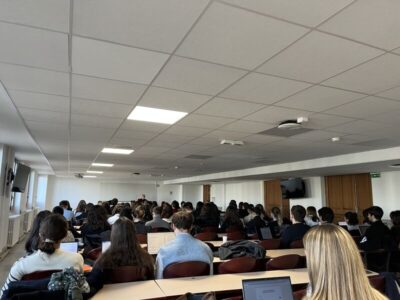
► Full reference : [rubrique p="Présentation"]M.-A. Frison-Roche[/rubrique], Saisir les principes du Droit de la Compliance à travers l'actualité (Understanding the principles of compliance law through current current legal cases and events), Jean Moulin  - Lyon 3 University Law Faculty, 10 December 2025. - ► Methodological presentation of this 4-hour MasterClass : It is difficult to teach a branch of law that is still being developed, to find a way to open its doors, because if by explaining its principles ex abrupto, the risk exists of remaining at the door, even though the aim is to open it. This door is all the more blocked by the accumulation of multiple regulatory corpus, which are now perceived as being linked to Compliance Law: GDPR, Sapin 2, Vigilance, Nis2, Dora, FCPA, etc.; These are highly technical and complicated, and tend to be studied in silos, with little connection between them and little articulation with the traditional branches of Law. Therefore, the principles that form the backbone of Compliance Law as an autonomous branch of Law are all the less apparent, even though they would make these "compliance blocks" more intelligible and manageable. However, setting out these principles, which shed light not only on the current positive law but also on how it will evolve, seems "theoretical". In order to open the door to this new branch of Law, which already occupies a significant place in practice and is set to expand, so that it can be handled by lawyers who understand its spirit and is not entirely dominated by those from other disciplines who will master its tools (risk mapping, assessment, internal investigation, etc.), most often through algorithms and platforms (compliance by design), it is relevant to start with a few cases, a few decisions, a few texts, and a few comments, to gauge what they reveal. Because the principles are already there. They are gradually emerging. The challenge is that they often emerge quickly, in a manner that is sufficiently consistent with other branches of Law, and that the legal aspect takes precedence. That is what is at stake today. Each hour is devoted to a different case, based on a document of a different legal genre. - 🌐read a post on LinkedIn (in French) - - ⛏️Find out more  : 🕴🏻M.-A. Frison-Roche, 📝[lien a="le-droit-de-la-compliance"]Compliance Law[/lien], 2016 🕴🏻M.-A. Frison-Roche, 📝[lien a="compliance-monumental-goals-beating-heart-of-compl"]Monumental Goals, the beating heart of Compliance Law[/lien], 2023 🕴🏻M.-A. Frison-Roche, 📝[lien a="ce-a-quoi-oblige-un-engagement-dans-les-systemes-d"]In Compliance Law, the legal consequences for Entreprises of their commitments and undertakings[/lien], 2025 🕴🏻M.-A. Frison-Roche, 📝[lien a="droit-de-la-compliance-et-contentieux-systemique"]Compliance Law and Systemic Litigation[/lien], 2025   - 🌐Follow Marie-Anne Frison-Roche on LinkedIn 🌐follow Marie-Anne Frison-Roche on Instagram 🌐Subscribe to the Newsletter MAFR Regulation, Compliance, Law 🌐Subscribe to the video newsletter MAFR Overhang 🌐Subscribe to the Newsletter MaFR Law & Art

introductory conference

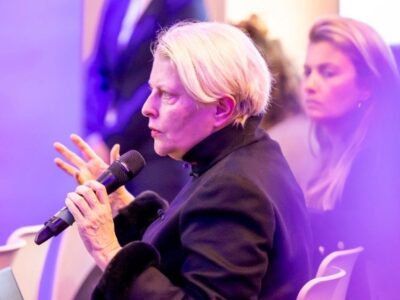
🎥Le juriste, requis et bien placé pour le futur ((The lawyer needed and well placed for the future), in 🧮Les Eclaireurs du Droit

► Full Reference : [rubrique p="Présentation"]M.-A. Frison-Roche[/rubrique], "Le juriste, requis et bien placé pour le futur" (The lawyer needed and well placed for the future), in Groupe Lamy Liaisons, Les Éclaireurs du Droit,  Hôtel de l’Industrie, Place Saint Germain des Près, Paris, 11 March 2025, 16h. - This speech opens a series of 4 workshops on the following themes: - The challenge of Trust - The challenge of Risk - The challenge of Transmission - The challenge of  leadership - 🧮see the full programme of this manifestation (in French) - ⬜see the slides basis made for this speech (which were not projected) (in French) - 🎥 watch the short video made after the conference (in French) - ► English Summary of this introductory conference: The 4 sessions will address the successive themes of trust, risk, transmission and leadership, which legal professionals are facing, particularly as a result of algorithms. For an introductory analysis, it is possible to make a distinction inside the Future. The future has a part of Stability: the jurist can contribute to this stability, i.e. the preservation of the past (I). The future has an part of Predictability: the lawyer must increase this part in the present itself (II). The future has a part of radical novelty (III): at this point, which may correspond to a precipice, if no one had imagined it, the lawyer can also be there. Until now, we think of lawyers more in the first 2 hypotheses, less in this one. Is it pertinent? In each of these dimensions, the algorithmic system (AI) is presented as replacing or dominating the human. In each of these 3 dimensions, Lawyers must be present, as they form a community that must remain united around the very idea of Law (algorithms do not conceive ideas, it is humans who transmit them to other humans, and the algorithmic system must remain a medium). As far as the Stability of the future is concerned, the Lawyer can and must contribute to it, in particular through Transmission, because there is less of a blank page as algorithmic 'creation' is based on past data, and training, where the human being will be all the more central as machines have to be handled. As far as the Predictability of the future is concerned, it is a question of assessing the Risks, whether specific or systemic, legal or non-legal, in order not to take them or on the contrary to take them. The more the Lawyer is involved in risk-taking, the more he or she will be in the right place, before and during the action. As far as the Radically New future is concerned, it is not easy to qualify AI as such or not, but now the possible disappearance of the Rule of Law in the United States is one of them. All Lawyer are expected. Every lawyer must have two virtues (which the algorithm cannot not have): the virtue of Justice and the virtue of Courage. It is these virtues that we must pass on and share.       - Current events have led me to devote the time available to me to focusing on a single perspective, the third, to say what is expected of Lawyers if we perceive something radically new in the near future, what everyone does. Indeed, in the United States, on the one hand there is a head of state for whom the Law does not exist and who uses the power of regulation to express his absolute indifference to other states, companies and human beings, and on the other an entrepreneur who claims that he is going to become the master of algorithmic technology, a system over which he already wields great power. Faced with this Radical Novelty, we expect the community of Lawyers, all lawyers, whatever their place, their technical mastery, their level, their nationality, to speak out and say No. As Kelsen, Cassin or Ginsberg did. Say No and help others to say No. To do this, Lawyers, as human beings who care about other human beings, must be aware of the twofold virtue expected of them: the virtue of commitment to Justice and the virtue of Courage.       - 🌐follow Marie-Anne Frison-Roche sur LinkedIn 🌐follow Marie-Anne Frison-Roche on Instagram 🌐subscribe to the Newsletter MAFR Regulation, Compliance, Law 🌐subscribe to the Video Newslette MAFR Surplomb

🎥 Le Diable dans la bouteille des Codes de bonne conduite (The Devil in the bottle of Codes of Conduct)

  ► Full Reference: M.-A. Frison-Roche, "Le Diable dans la bouteille des Codes de bonne conduite"  (The Devil in the bottle of Codes of Conduct). Hommage to Gérard Farjat, Center of Economic Law, Nice, France, 10 March 2016 . -   ► see the conference . (in French)  ► see the [lien a="plan-de-la-conference-le-diable-dans-la-bouteille-"] construction of this conference[/lien] (in French)   ► see the  slides, used as basis for this conference (in French). -   ► English presentation of this conference: In 1978, our mutual friend Gérard Farjat wrote a memorable article on [lien a="farjat-gerard-2"]"les codes de conduite privés"[/lien] ('private codes of conduct') (in French), codes of conduct which have since flourished. I remember that it worried him because he was aware of the rhetoric, and even the contradiction, that these codes contain, and at the same time he did not see what could stop this legitimate way for international companies to organise an 'order' at home, since the Law was no longer able to offer them one from the outside, nor was Law capable of limiting the less virtuous tendency of companies to fashion norms by which they exercise power not only to organise themselves but also to govern others and the outside world. When Gérard Farjat wrote this article in 1978, Corporate Social Responsibility had not yet been conceived... Have we reached the same point? Can we even say that the situation has worsened, with the world being "standardised" and "governed" by "global" companies that write and impose codes of "good" conduct that express what is "good" in itself and end up constituting veritable "global constitutions"? No. In fact, the opposite is true. Through the power of Regulators and Supervisors, institutions of public authority, public standards are internalised in "global" companies, which repeat them in codes of conduct and become their own regulators and supervisors. -

This conference will be given in French

La régulation du commerce à l’aune de la paix, in “La paix, un possible objectif pour les juristes de droit des affaires ? (Regulation of trade in terms of peace, in “Peace, a potential goal for lawyers in business law?”)

If one admits that Regulation is identified by the balancing of the principle of competition with another principle, a-competitive or anti-competitive, then peace is destined to slip into this technical definition of Regulation . So, it is possible to conceive relagulating of trade in terms of peace. Indeed, if we consider that liberalism has links with competition, we can instead consider economic mechanisms which are "colored" by the concern for social justice, equitable distribution of wealth. For example the construction of infrastructure for the future common good can be interpreted as being relied on the concept of peace, conceived as Kantian project. Organized in this sensee, the regulation belongs to the public international law. But we can design a system in a more economic perspective, more for the right business. Thus, the example "oil against food" program that you can just read it as a regulation of commerce, shows this sort of trade regulation is built to engender peace negatively  preventing build up war chests and allowing the citizens to be transformed in consumers.Furthermore, when the limitation of the rights of creditors had been done ​​by CERDI , it had been on behalf of the right of States to exercise a power expressly to "regulate" its money in disfavor th creditors but to bring peace through devaluation so that citizens can remain consumers. Can we go further? Can we go beyond casuistry?